
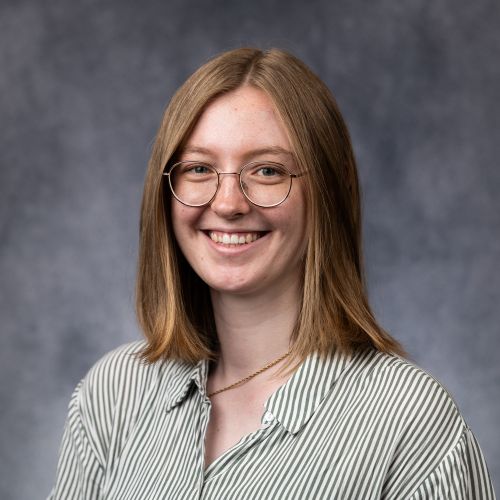
 Paula Reichel, a Molecular and Cellular Pathology PhD candidate, has received a prestigious National Institutes of Health (NIH) F31 fellowship to support her research on how food allergies develop early in life.
The competitive grant will provide up to three years of funding, covering Reichel’s stipend and tuition while she continues her doctoral studies in the lab of Simon Hogan, PhD. Beyond financial support, the award recognizes Reichel’s promise as an emerging scientist in the growing field of food allergy research.
“This is a really big opportunity,” Reichel said. “It obviously benefits the lab, but it also has a huge impact on my career trajectory.”
Investigating How Food Allergies Begin
Reichel’s research focuses on a fundamental question: how food allergens are presented to the immune system by the gut, and why does that process trigger allergic reactions in some people?
Her work builds on existing knowledge of intestinal biology, particularly the role of specialized cells in the gut lining. These include goblet cells, Paneth cells, and enteroendocrine cells, which not only help protect the body through their secretory functions, but can also transport antigens, substances that can provoke an immune response, across the intestinal barrier. Reichel gives an overview of these transport mechanisms in her recently published review article in Current Allergy and Asthma Reports.
“In people who are not food allergic, this transport plays a protective role,” Reichel explained. “But under certain conditions, they may also contribute to food allergic reactions.”
Her NIH-funded project takes this research a step further by investigating a theory known as allergic gut tropism. This hypothesis suggests that food allergies may actually begin outside the gut, on the skin.
Linking Skin Damage to Food Allergy
Reichel’s work explores how early-life skin damage, such as atopic dermatitis (eczema), may increase a child’s susceptibility to developing food allergies later.
“The idea is that children may first be exposed to food allergens through damaged skin,” she said. “That exposure primes the immune system, and later the response is recruited to the gut, leading to a food allergy.”
Through her research, Reichel aims to better understand the biological mechanisms connecting these early exposures to long-term immune responses in the digestive system.
“If we can understand how this process starts,” she added, “we may eventually be able to develop strategies to prevent food allergies altogether.”
A Foundation Built on Personal Motivation
Reichel’s interest in food-related immune conditions is deeply personal. She was diagnosed with celiac disease during high school, a condition that, while not a food allergy, significantly affects diet and health.
“That really motivated me to pursue food-related research,” she said.
She earned both her undergraduate degree in nutritional science and her master’s degree in nutritional medicine in Germany, where she grew up. During her master’s program in Lübeck, she gained her first research experience in food allergy and was introduced to Hogan through one of her mentors, Dr. Anna Kordowski.
Despite COVID-era challenges limiting international opportunities, Reichel secured a three-month internship in Hogan’s laboratory in the United States, a pivotal experience that led her to pursue a PhD at Michigan.
“About a month after our first meeting, I was in his lab,” she said.
A Collaborative Research Environment
Reichel credits the collaborative environment at Michigan as a key factor in her success. Hogan’s lab is part of the Mary H. Weiser Food Allergy Center, one of the few places bringing together a large group of researchers focused on this specialized field.
“Food allergy research is still relatively small,” she said. “Having so many researchers working on different aspects of it in one place has been incredibly helpful.”
She noted that this strong research environment also played a role in securing her NIH fellowship, as grant reviewers consider institutional support and collaboration opportunities when evaluating applications.
Looking Ahead
Now entering her fourth year in the PhD program, Reichel plans to continue in academia after graduation. Her immediate goal is to complete a postdoctoral fellowship, with the long-term aim of becoming a principal investigator and leading her own research program.
“I want to do academic research as long as it’s still fun,” she said. “And it still is.”
Originally from Germany, Reichel is still deciding whether her future career will take place in the United States or Europe.
Life Beyond the Lab
Outside of her research, Reichel enjoys long-distance hiking and has completed multi-day treks in both Spain and Scotland, including the 99-mile West Highland Way.
She is already planning her next adventure: a hiking trip to Grand Teton and Yellowstone National Parks.
 ON THE COVER
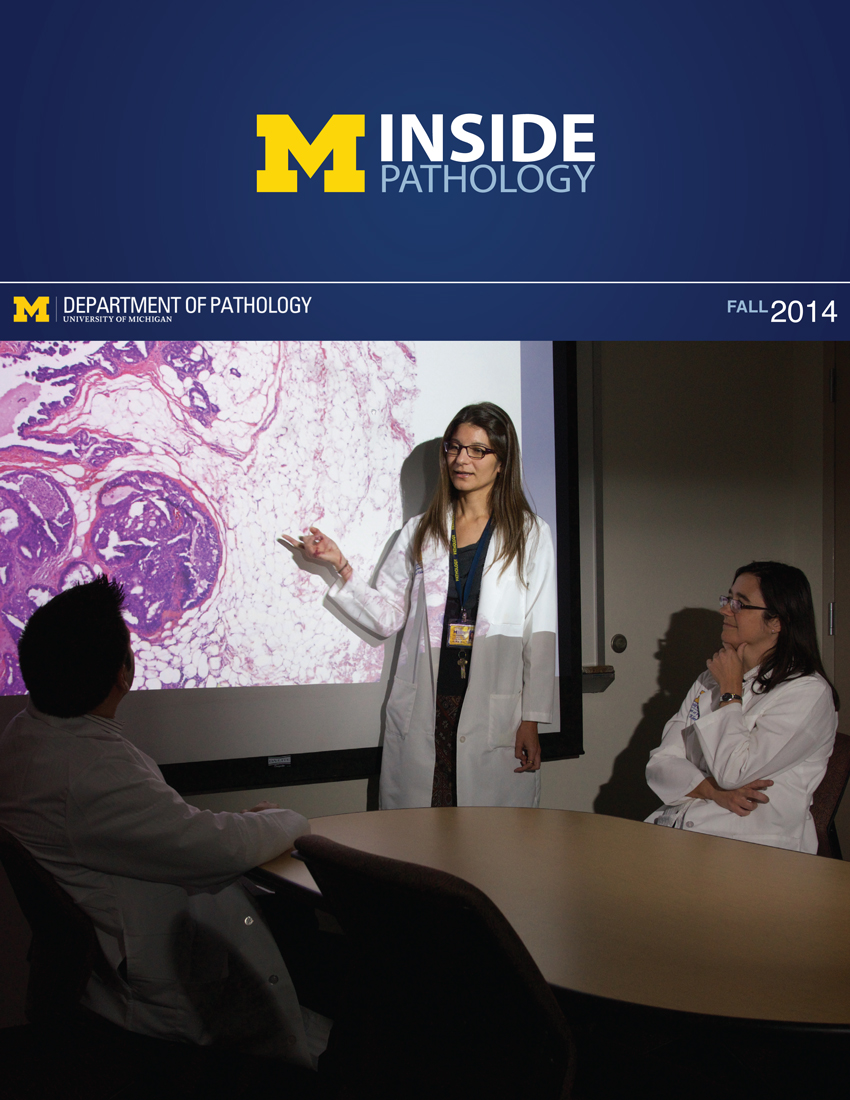
Breast team reviewing a patient's slide. (From left to right) Ghassan Allo, Fellow; Laura Walters, Clinical Lecturer; Celina Kleer, Professor. See Article |
newsletter
INSIDE PATHOLOGYAbout Our NewsletterInside Pathology is an newsletter published by the Chairman's Office to bring news and updates from inside the department's research and to become familiar with those leading it. It is our hope that those who read it will enjoy hearing about those new and familiar, and perhaps help in furthering our research. CONTENTS
|
 ON THE COVER
Autopsy Technician draws blood while working in the Wayne County morgue. See Article |
newsletter
INSIDE PATHOLOGYAbout Our NewsletterInside Pathology is an newsletter published by the Chairman's Office to bring news and updates from inside the department's research and to become familiar with those leading it. It is our hope that those who read it will enjoy hearing about those new and familiar, and perhaps help in furthering our research. CONTENTS
|
 ON THE COVER
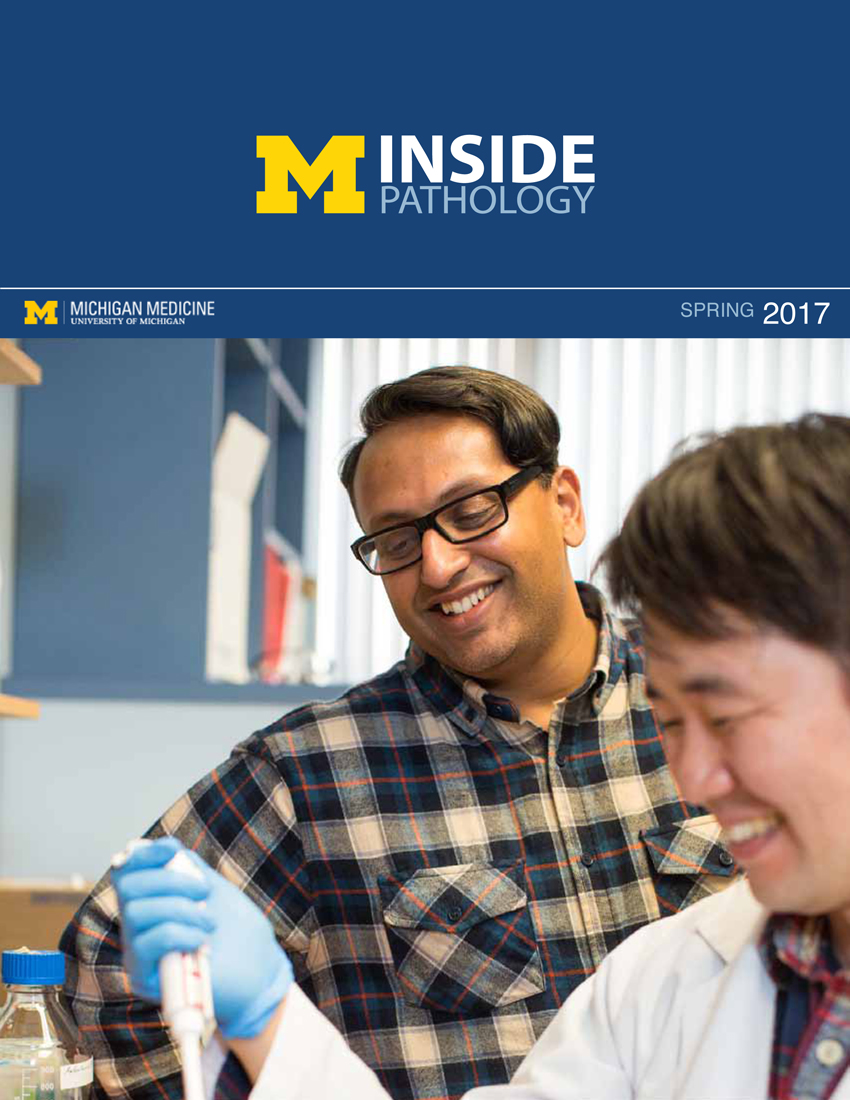
Dr. Sriram Venneti, MD, PhD and Postdoctoral Fellow, Chan Chung, PhD investigate pediatric brain cancer. See Article |
newsletter
INSIDE PATHOLOGYAbout Our NewsletterInside Pathology is an newsletter published by the Chairman's Office to bring news and updates from inside the department's research and to become familiar with those leading it. It is our hope that those who read it will enjoy hearing about those new and familiar, and perhaps help in furthering our research. CONTENTS
|
 ON THE COVER
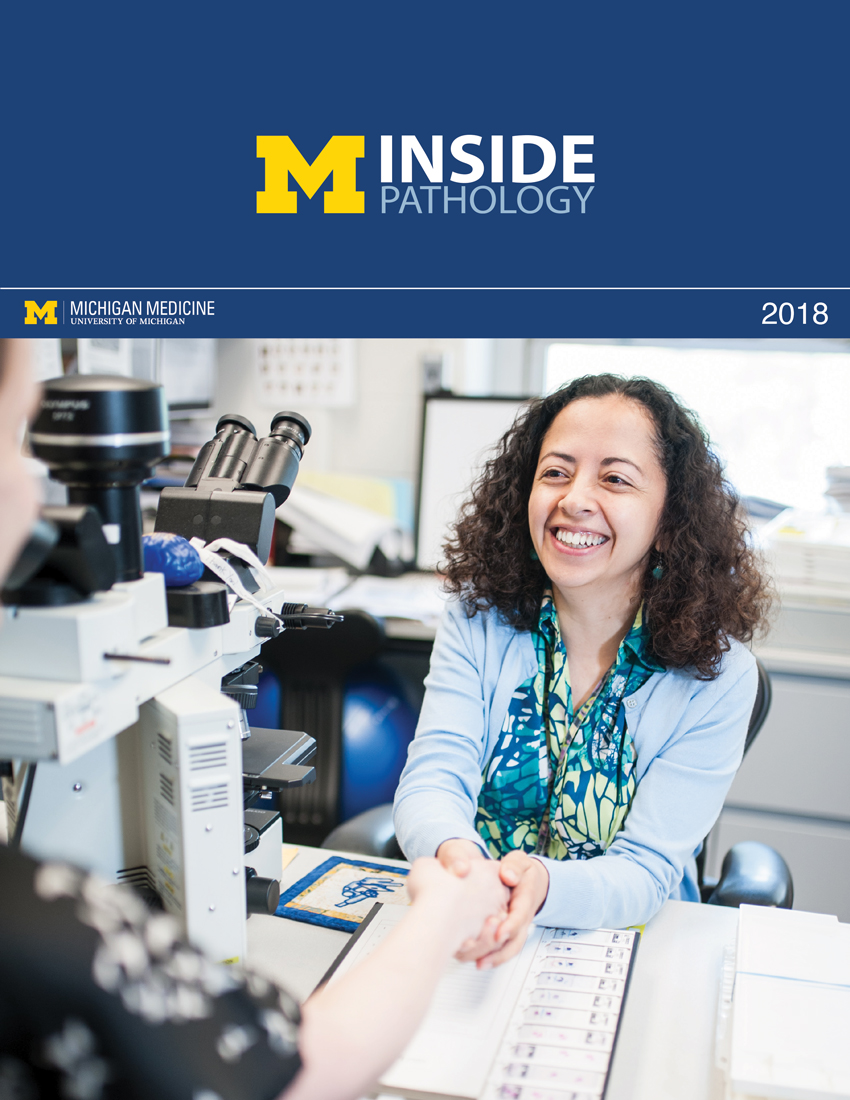
Director of the Neuropathology Fellowship, Dr. Sandra Camelo-Piragua serves on the Patient and Family Advisory Council. |
newsletter
INSIDE PATHOLOGYAbout Our NewsletterInside Pathology is an newsletter published by the Chairman's Office to bring news and updates from inside the department's research and to become familiar with those leading it. It is our hope that those who read it will enjoy hearing about those new and familiar, and perhaps help in furthering our research. CONTENTS
|
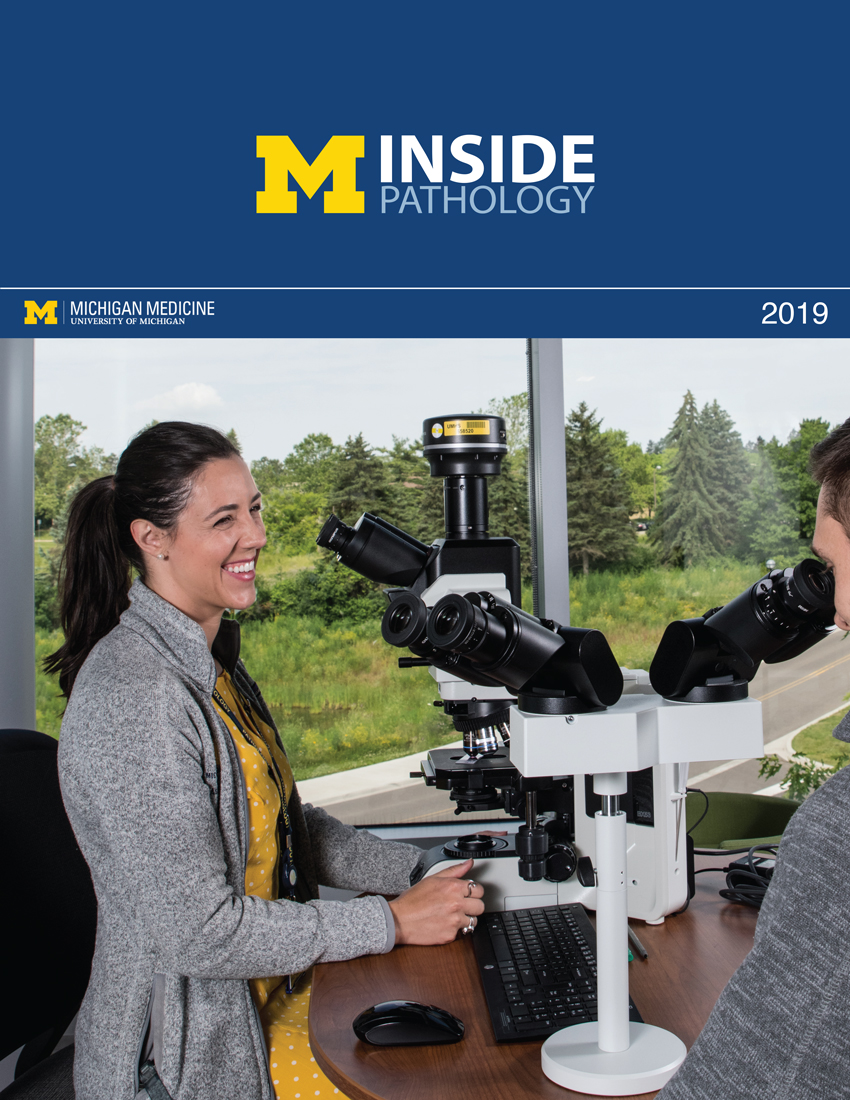 ON THE COVER
Residents Ashley Bradt (left) and William Perry work at a multi-headed scope in our new facility. |
newsletter
INSIDE PATHOLOGYAbout Our NewsletterInside Pathology is an newsletter published by the Chairman's Office to bring news and updates from inside the department's research and to become familiar with those leading it. It is our hope that those who read it will enjoy hearing about those new and familiar, and perhaps help in furthering our research. CONTENTS
|
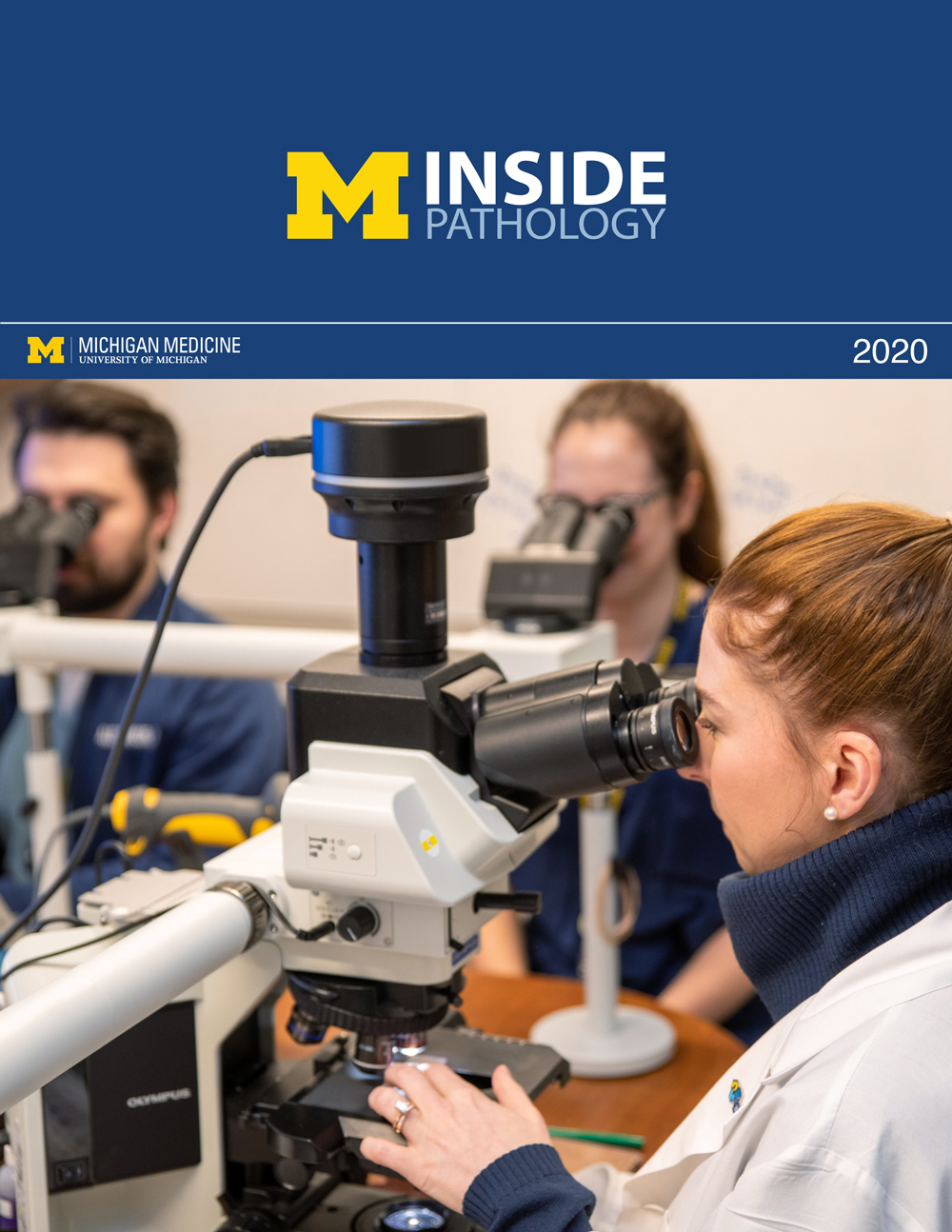 ON THE COVER
Dr. Kristine Konopka (right) instructing residents while using a multi-headed microscope. |
newsletter
INSIDE PATHOLOGYAbout Our NewsletterInside Pathology is an newsletter published by the Chairman's Office to bring news and updates from inside the department's research and to become familiar with those leading it. It is our hope that those who read it will enjoy hearing about those new and familiar, and perhaps help in furthering our research. CONTENTS
|
 ON THE COVER
Patient specimens poised for COVID-19 PCR testing. |
newsletter
INSIDE PATHOLOGYAbout Our NewsletterInside Pathology is an newsletter published by the Chairman's Office to bring news and updates from inside the department's research and to become familiar with those leading it. It is our hope that those who read it will enjoy hearing about those new and familiar, and perhaps help in furthering our research. CONTENTS
|
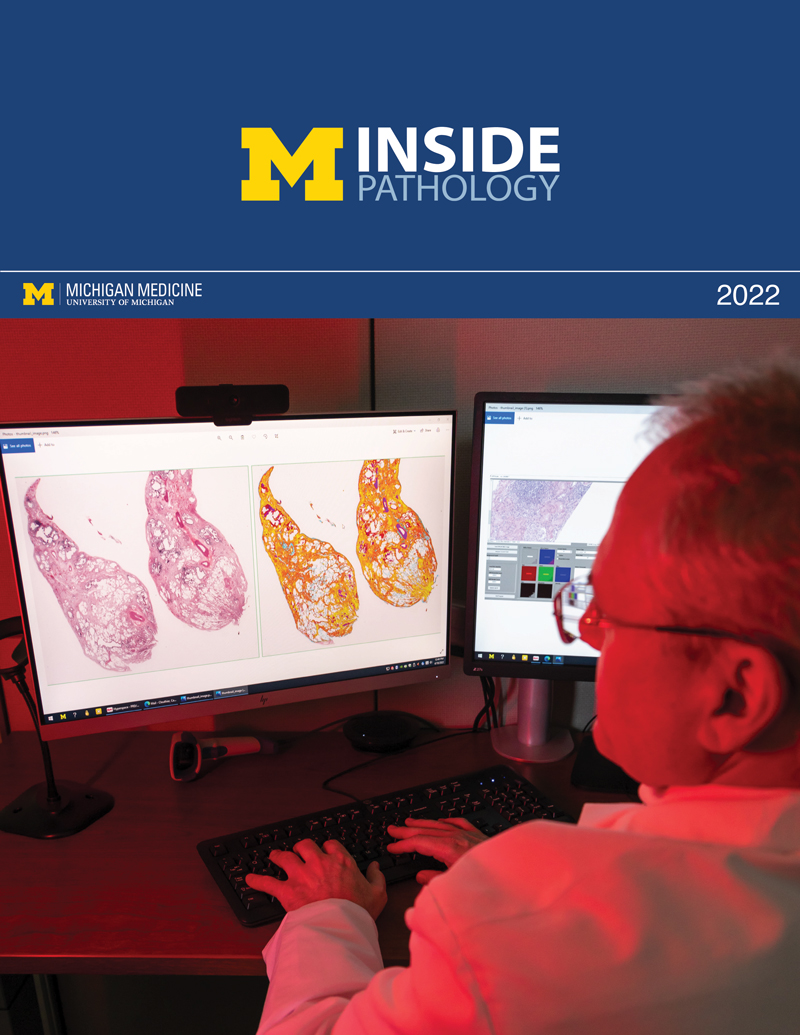 ON THE COVER
Dr. Pantanowitz demonstrates using machine learning in analyzing slides. |
newsletter
INSIDE PATHOLOGYAbout Our NewsletterInside Pathology is an newsletter published by the Chairman's Office to bring news and updates from inside the department's research and to become familiar with those leading it. It is our hope that those who read it will enjoy hearing about those new and familiar, and perhaps help in furthering our research. CONTENTS
|
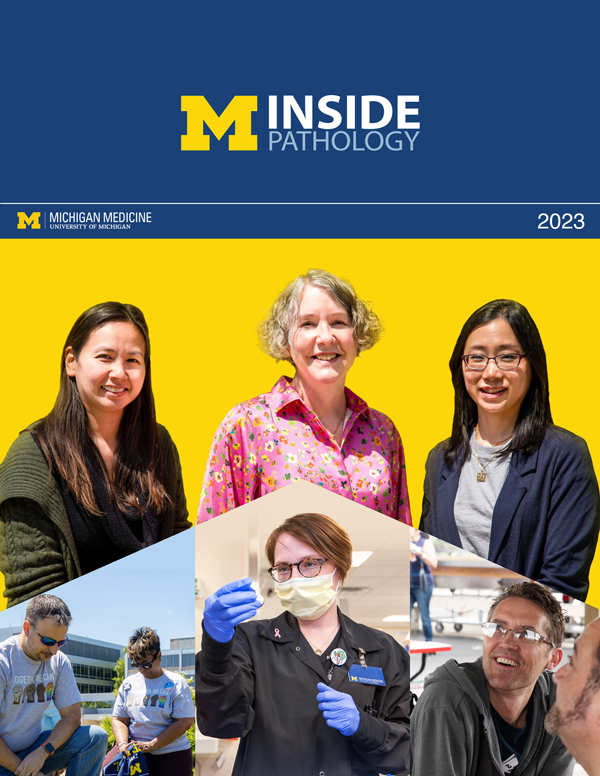 ON THE COVER
(Left to Right) Drs. Angela Wu, Laura Lamps, and Maria Westerhoff. |
newsletter
INSIDE PATHOLOGYAbout Our NewsletterInside Pathology is an newsletter published by the Chairman's Office to bring news and updates from inside the department's research and to become familiar with those leading it. It is our hope that those who read it will enjoy hearing about those new and familiar, and perhaps help in furthering our research. CONTENTS
|
 ON THE COVER
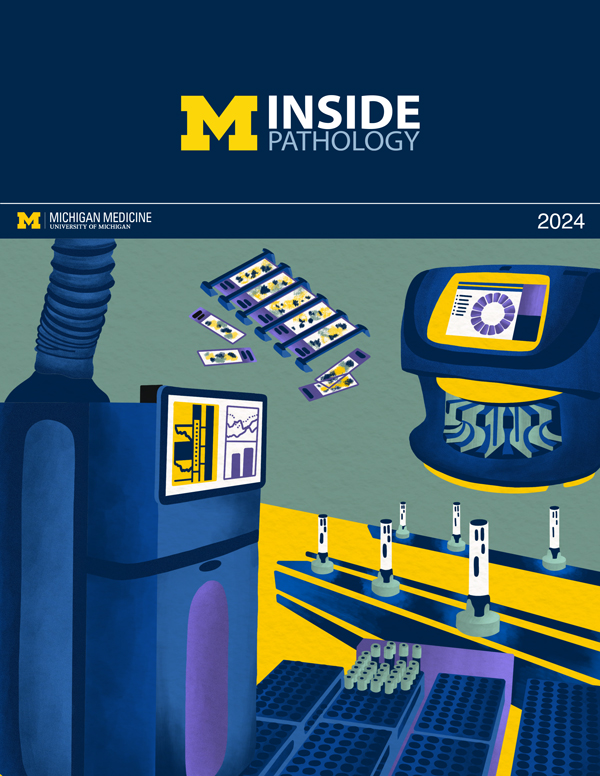
Illustration representing the various machines and processing used within our labs. |
newsletter
INSIDE PATHOLOGYAbout Our NewsletterInside Pathology is an newsletter published by the Chairman's Office to bring news and updates from inside the department's research and to become familiar with those leading it. It is our hope that those who read it will enjoy hearing about those new and familiar, and perhaps help in furthering our research. CONTENTS
|
 ON THE COVER
Rendering of the D. Dan and Betty Khn Health Care Pavilion. Credit: HOK |
newsletter
INSIDE PATHOLOGYAbout Our NewsletterInside Pathology is an newsletter published by the Chairman's Office to bring news and updates from inside the department's research and to become familiar with those leading it. It is our hope that those who read it will enjoy hearing about those new and familiar, and perhaps help in furthering our research. CONTENTS
|
MLabs, established in 1985, functions as a portal to provide pathologists, hospitals. and other reference laboratories access to the faculty, staff and laboratories of the University of Michigan Health System’s Department of Pathology. MLabs is a recognized leader for advanced molecular diagnostic testing, helpful consultants and exceptional customer service.