
Clinical Pathology
2026 Symposium
April 23, 2026
The 14th Clinical Pathology Symposium was a continuing education and networking event sponsored by the Department of Pathology. Michigan Medicine Department of Pathology is approved as a provider of continuing education programs in the clinical laboratory sciences by the ASCLS P.A.C.E.® Program.
Driving Impact from Bench to Brain
Celebrating clinical laboratory professionals as catalysts for innovation, connection, and communication. This event showcased how laboratory advances in blood-based biomarkers are transforming neurological care and underscores the vital role of lab professionals in bridging research, clinical practice, and public understanding.
—
How to Claim Credit
Attendees received a “session code” at the end of each talk to claim their credit.
Please use this code on the letter we provide:
Schedule
8:30 - 9:30 am
Check-In & Exhibits
9:30 - 10:30 am
From Bench to Bedside: Transforming Care for Patients with Mild Traumatic Brain Injury Using Blood-Based Biomarkers
Over the past decade, significant scientific progress has enabled the development of non-invasive, blood-based biomarkers capable of identifying distinct pathophysiological processes in traumatic brain injury (TBI). In this session, Dr. Korley and Dr. Gherasim will provide a comprehensive overview of the research supporting GFAP and UCH-L1 testing for TBI evaluation, as well as key considerations for clinical adoption and laboratory implementation. Drawing on Michigan Medicine’s laboratory experience, the presentations will discuss the challenges of integrating blood-based biomarker testing into emergency medicine practice. Additionally, approaches for evaluating the diagnostic and analytical performance of TBI tests, as well as strategies for meeting the operational and regulatory requirements necessary for the successful implementation of GFAP and UCH-L1 testing in mild TBI evaluation, will also be discussed. Intermediate level of instruction, 1.0 contact hour. (PATH-48100)
Event Objectives:
- Explain the scientific evidence supporting the use of blood-based biomarkers in suspected TBI.
- Describe the challenges with clinical adoption of TBI biomarkers in the Emergency Department.
- Develop an effective plan for analytical validation and successful implementation of blood-based TBI biomarkers.

Carmen Gherasim, PhD
Associate Professor and Section Director of Clinical Core Laboratories
Michigan Medicine
About Carmen Gherasim, PhD
After earning her PhD in Biological Chemistry, she continued her research as a postdoctoral fellow and research investigator at the University of Michigan, Ann Arbor. She then completed a clinical chemistry fellowship at the University of Utah/ARUP Laboratories before rejoining the University of Michigan in 2018. Currently, Dr. Gherasim is an Associate Professor of Pathology at Michigan Medicine, where she serves as Section Director of Clinical Core Laboratories, overseeing Clinical Chemistry, Clinical Mass Spectrometry, and Emergency Department Laboratories. She has published over 40 peer-reviewed articles, and her professional interests include translating biomarkers into clinical diagnostic tests, clinical assay development, and personalized medicine.

Frederick Korley, MD, PhD
Professor and Associate Chair for Research in Emergency Medicine
Michigan Medicine
About Frederick Korley, MD, PhD
Dr. Korley is a Professor and the Associate Chair for Research in Emergency Medicine at the University of Michigan. He is also the scientific director of the Massey TBI Grand Challenge, sponsored by the Weil Institute at the University of Michigan. This challenge distributes up to $750,000 annually to investigators with high-risk and high-reward ideas for developing novel diagnostics and therapeutics for traumatic brain injury (TBI).
Dr. Korley has conducted pioneering work in uncovering and quantifying gaps in emergency department evaluation and management of traumatic brain injury (TBI) and has developed novel diagnostic and therapeutic approaches to bridge these gaps. He is a PI of several NIH and Department of Defense-funded studies that aim to develop novel therapies for TBI and to use blood-based biomarkers to monitor response to therapy. He holds four patents for panels of brain-injury biomarkers and the methods used to measure them at the bedside. Dr. Korley’s research has been published as first-author manuscripts in high-impact journals such as NEJM, JAMA, JAMA Cardiology, Journal of the American College of Cardiology, and Lancet Neurology. He is the recipient of the 2021 SAEM Mid-Career Investigator Award. He is an elected member of the American Society for Clinical Investigators and the National Academy of Medicine.
10:30 - 11:00 am
Exhibits
11:00 am - 12:00 pm
We Need to Talk: Communicating Our Science to the Public
It is time to take your expertise out of the lab and into public spaces. This session will provide you with an overview of best practices for public-facing science communication and help you find opportunities to engage in this type of professional activity which is needed at this time. Basic level of instruction, 1.0 contact hour. (PATH-48200)
Event Objective:
- Discuss why medical professionals should engage in public science communication.
- Use best practices when communicating science information to the general public.
- List opportunities for engaging in science communication.

Rachel L. Morris, PhD, MLT (ASCP)
Graduate Program Director, Senior Academic Specialist, Biomedical Laboratory Diagnostics Program
Michigan State University
About Rachel L. Morris, PhD, MLT (ASCP)
Dr. Morris earned her undergraduate degrees from the University of Maine at Augusta and a PhD from Marquette University in Milwaukee. Her postdoctoral training was completed at Michigan State University and the University of Michigan Medical School. Since 2014, she has been a faculty member in the Biomedical Diagnostics Program at MSU, teaching introductory pathology and medical microbiology. She oversees the online graduate program.
12:00 - 1:00 pm
Exhibits & Lunch
1:00 pm - 2:00 pm
Advances in Blood-Based Biomarkers of Alzheimer's Disease
The past five years have been particularly exciting at the intersection of neurology and clinical laboratory science regarding Alzheimer’s disease. Advancements in the treatment, diagnosis, and monitoring of Alzheimer’s disease-related pathology are accelerating, spurred in part by the introduction of effective monoclonal antibody disease-modifying therapies. This talk will focus on interpreting Alzheimer’s disease biomarkers, especially in plasma. This overview will include clinical assay selection, performance considerations, and diagnostic accuracy. Additionally, potential confounding factors such as Chronic Kidney Disease (CKD) and Heterophile interference will be discussed. Finally, the potential future of diagnostics in the evolving Alzheimer’s disease care landscape will be discussed. Intermediate level of instruction, 1.0 contact hour. (PATH-48300)
Event Objective:
- Summarize current basic knowledge of Alzheimer’s disease pathogenesis and diagnosis.
- Explain how Alzheimer’s disease CSF biomarkers have been incorporated into the diagnostic journey of patients presenting with cognitive impairment.
- Describe the emerging clinical utility of blood-based biomarkers of Alzheimer’s disease.

Joshua Bornhorst, PhD, DABCC
Associate Professor and Consultant in the Department of Laboratory Medicine and Pathology at the Mayo Clinic, Co-Director of the Clinical Immunoassay and Metals Laboratories
About Joshua Bornhorst, PhD, DABCC
Dr. Bornhorst received a PhD in biochemistry from the University of Colorado at Boulder, and subsequently entered the clinical chemistry fellowship program at University of Utah/ARUP laboratories. Prior to moving to Mayo clinic several years ago, he was Associate Professor and director of Clinical Chemistry Laboratories at the University of Arkansas for Medical Sciences. He is a past winner of the Association for Diagnostics and Laboratory Medicine (ADLM/AACC) Award for Outstanding Scientific Achievements by a Young Investigator and has produced over 80 peer-reviewed publications. His recent research focus has been on neurology related diagnostics and other select biomarkers including labile copper.
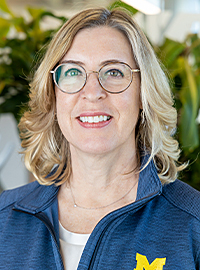
Karen Barron
Allied Health Education Program Manager
(734) 232-6751
karbarro@med.umich.edu
Lauren Branson
Pathology Administration
Kristina Cantrell
Blood Bank
Chelsea Decker
Translational Pathology
Anastazia Hartman
Pathology Communications
Kristina Martin
Clinical Pathology Operations Director
Olivia McClellan
Blood Bank
Lynn McCain
Pathology Communications
Kamran Mirza
Professor and Director of the Division of Education
Andrea Parkinson
Histocompatibility
Leesa Stanislovaitis
MLabs
Andrew Szczembara
Point of Care Testing
Brent Temple
Pathology Informatics & Communications
Carol Young
Microbiology