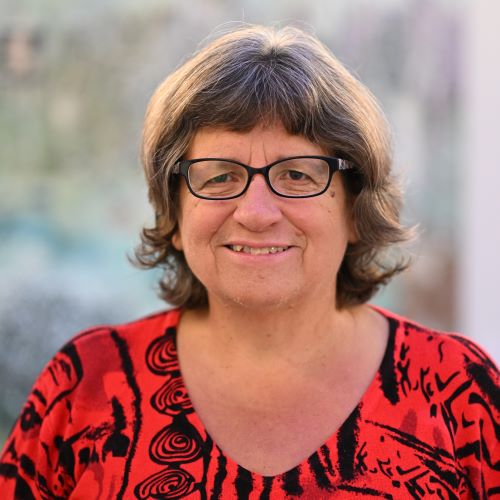
 Much has changed since 1974, when Carol Young, MT-ASCP, clinical research project manager, joined the Department of Pathology. Looking back, Young thanks Nancy Dock for introducing her to microbiology. Young, whose father and grandfather were teachers, initially thought she would become a chemistry teacher. She had fallen in love with chemistry in high school. Then, a mother of a friend at church, Joanne Teufel, who worked in a lab at a Toledo hospital, invited her to visit the lab and introduced her to the field of laboratory medicine. “I thought, ‘I could do that.’ I never knew what a difference that would make in my life.” Young pursued a bachelor’s degree in laboratory medicine at the University of Michigan. “At the time, we did three years of undergraduate work and one year of internship. My first 14 weeks were all in microbiology, and it was that instructor, Nancy Dock, who got me really excited about microbiology. I liked figuring out unknowns, and that is something we do every day.” However, she was still considering a career in clinical chemistry until she experienced her chemistry rotation. “I did not want to be fixing instruments for my career. No way! That is not what I signed up for!” From that point on, Young knew microbiology was for her.
Between her junior and senior years of college, Young had an opportunity to train in hematology and work weekends. Instead, she decided to return home to Toledo and be a lifeguard for the summer. As she prepared to return for her senior year, she contacted her faculty advisor to inquire about any job openings in the laboratory. There was an opening available in microbiology. “I worked every other weekend for them through my senior year. We did not have the rules and regulations that we have today, so much of our work was self-taught. I worked on first-generation blood culture testing, susceptibility testing, and culture reading. When I completed my internship, they had a job for me. I was well trained in the micro lab by that time.”
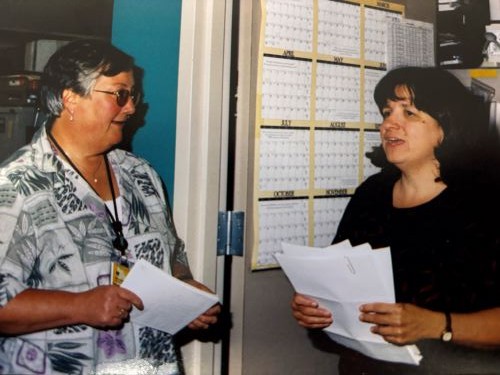
The microbiology lab continued to grow, and soon Young was spending more time training new staff and troubleshooting than she was working on the bench. She decided to explore opportunities. “At the time, we had splinter labs located in other parts of the health system. There was an opening at the pediatric bacteriology lab at Mott Hospital staffed by three people. I decided to apply. I was about 24 years old. The staff in the lab did not work well together, and soon, the others left, and I had to hire a whole new staff. That allowed me to make changes to bring this lab up to the standards we had in the main microbiology hospital laboratory.” During her time there, she worked closely with the chair of pediatric infectious diseases. “I got so much training in disease processes, test utilization, and learning how physician use microbiology results in the care of their patients. I learned a lot of clinical skills that people don’t get today.”
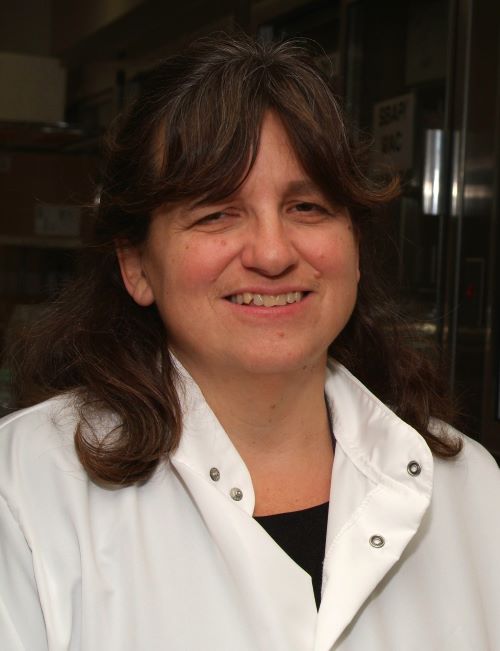 In time, the splinter labs were consolidated under the Pathology laboratories, and Young returned to the microbiology laboratory. She was no longer running her own laboratory and needed new challenges. She joined the South Central Association for Clinical Microbiology. “The work I did for this group gave me a great deal of satisfaction and gratification. It brought me the joy I needed.” Young remains active in this group today. She serves as their Spring program chair and exhibit chair. “I have a lot going on with that organization, so even post-retirement, that is going to sustain me and my identity. I can’t imagine retirement without staying involved in microbiology in this way.”
Over time, she was promoted to a supervisory position in microbiology, a role she held for approximately 30 years. “At that time, Dr. Duane Newton, the director of microbiology, was having a difficult time keeping up with all the research requests from around the University of Michigan and externally. He had a 20-hour position available for someone to help him manage these research projects. I jumped at that idea. So, I worked 20 hours on that and 20 hours on other things. That is what I have been doing ever since.” In her new role, Young worked with clinical trials and with researchers studying specific microorganisms. “Right now, I’m working with the Kellogg Eye Center, where I gather up isolates that they want to build their bacterial repository for organisms that cause corneal ulcers. They are trying to find a more rapid way to diagnose those infections rather than waiting several days for cultures. I am also working with a pediatrician on a certain type of streptococcus that causes brain abscesses.” She works with several researchers who study specific bacteria, such as Enterococcus and Acinetobacter. “These researchers often spend their entire careers studying a single bacterial organism.” She also spends a significant amount of time packaging and shipping organisms to other research institutions.
 “One of the funniest projects I had to work with was something called the Frankel grant. A researcher sought ways to enhance the ECMO process and needed a blood source. He went to a slaughterhouse, collected pig blood, and shipped it to me. This blood was contaminated from the slaughterhouse, so I developed a whole process for working with these blood samples.”
Another project she worked on was with the School of Public Health. “In 1974, I worked with a researcher developing the FluMist vaccine. It took him 40 years for this vaccine to come to market. His entire career was dedicated to creating an influenza vaccine.”
Microbiology was much different when Young began than it is today. “We didn’t have resources and guidelines like we have today. We had a bunch of biochemicals in test tubes, and it took us days to identify things. We did not have computers and used slide rules instead of calculators.” Today, the lab is highly computerized, featuring automation lines and electronically controlled environments for growing organisms. Nearly every aspect of the lab has changed. “In 1998, when Dr. Carl Pierson was the lab director, he wanted to bring in our first PCR assay. I thought he was crazy, but little did I know, PCR was the wave of the future.”
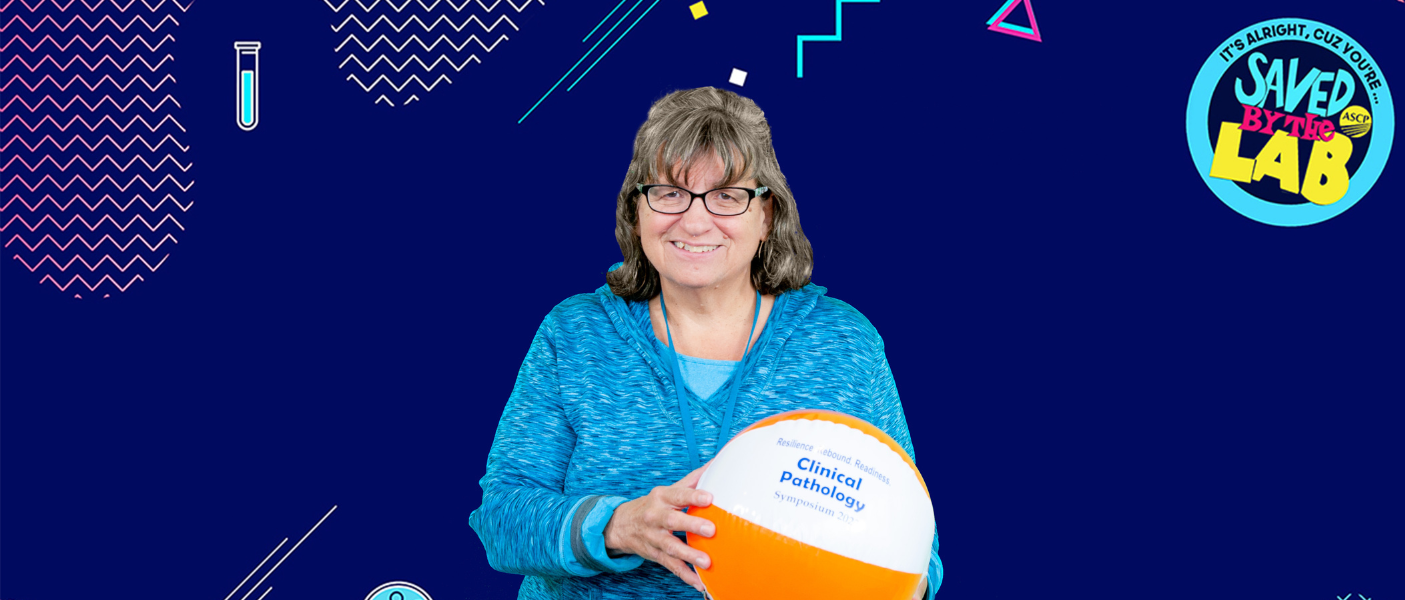
One thing never changed for Young, however. She still loves to teach. “I teach employees, students, interns, and residents. That brings me a lot of joy. I grew up wanting to be a teacher, and I really like to teach.” Professional development has always been important to her. “Suzanne Butch and I started the Clinical Pathology Symposium, which is held every April. We recognized the need to have internal ways for technologists to get their continuing education credits.” She also enjoys collaborating with industry partners, developing new technologies, and bringing in new tests to validate. “I am committed to improving the microbiology workflow and making it more cost-effective.”
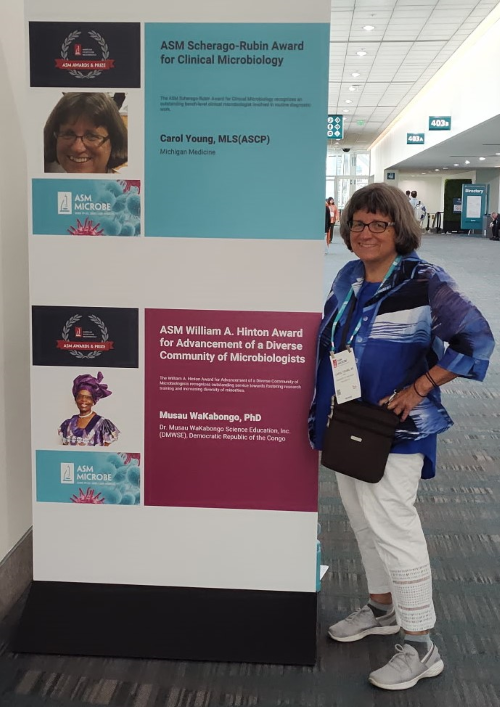 Her commitment to microbiology was recognized in 2012 when she received the Significant Contributor to Clinical Microbiology Award from the South Central Association for Clinical Microbiology, and this past year, when she received the Scherago Rubin Award for Clinical Microbiology. This national award recognizes outstanding non-doctoral bench-level clinical microbiologists involved in routine diagnostic work and who demonstrate a strong record of engagement in the microbiology community outside their own institution. “I am very proud of that award. It was a career fulfillment to get it. I never dreamed I would receive it.” While Young was surprised and honored, those who knew her considered her the obvious choice. You can read more about this award here.
On a personal level, Young enjoys traveling. Growing up, she would travel with her family in their Airstream camper to locations across the United States. While she has seen much of the country, she hasn’t yet visited Oregon, Washington, or spent much time in New England. These destinations, along with cruises and trips to other countries, are on her retirement bucket list. She also enjoys spending time with her significant other at their house on a lake in Traverse City. “I am an avid swimmer, and I like to swim around that lake.” She also volunteers for the Traverse City Cherry Festival when she is up there. Giving back to the community is important to her. It gives her a sense of purpose, and she looks forward to having more opportunities to do so in the future.
Carol Young plans to retire on May 5th. Be sure to take a few moments to thank her for her service and to wish her well. We wish you the best, Carol!
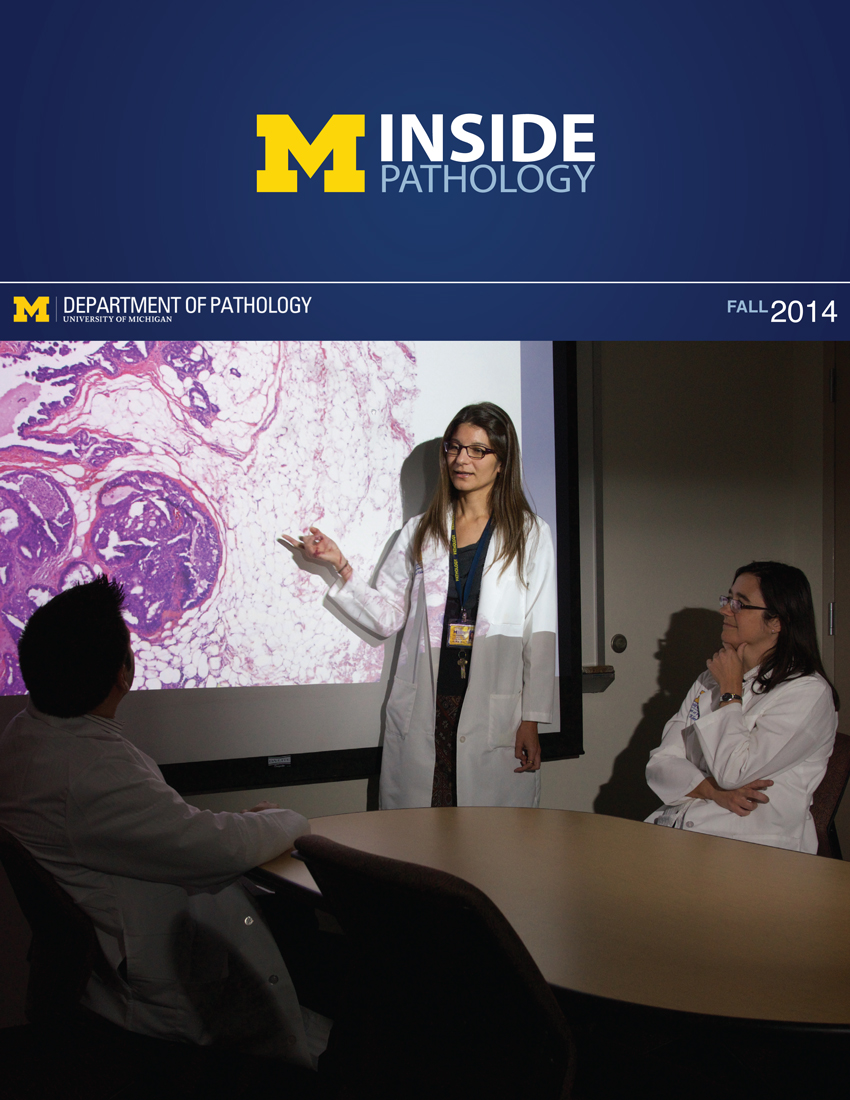 ON THE COVER
Breast team reviewing a patient's slide. (From left to right) Ghassan Allo, Fellow; Laura Walters, Clinical Lecturer; Celina Kleer, Professor. See Article |
newsletter
INSIDE PATHOLOGYAbout Our NewsletterInside Pathology is an newsletter published by the Chairman's Office to bring news and updates from inside the department's research and to become familiar with those leading it. It is our hope that those who read it will enjoy hearing about those new and familiar, and perhaps help in furthering our research. CONTENTS
|
 ON THE COVER
Autopsy Technician draws blood while working in the Wayne County morgue. See Article |
newsletter
INSIDE PATHOLOGYAbout Our NewsletterInside Pathology is an newsletter published by the Chairman's Office to bring news and updates from inside the department's research and to become familiar with those leading it. It is our hope that those who read it will enjoy hearing about those new and familiar, and perhaps help in furthering our research. CONTENTS
|
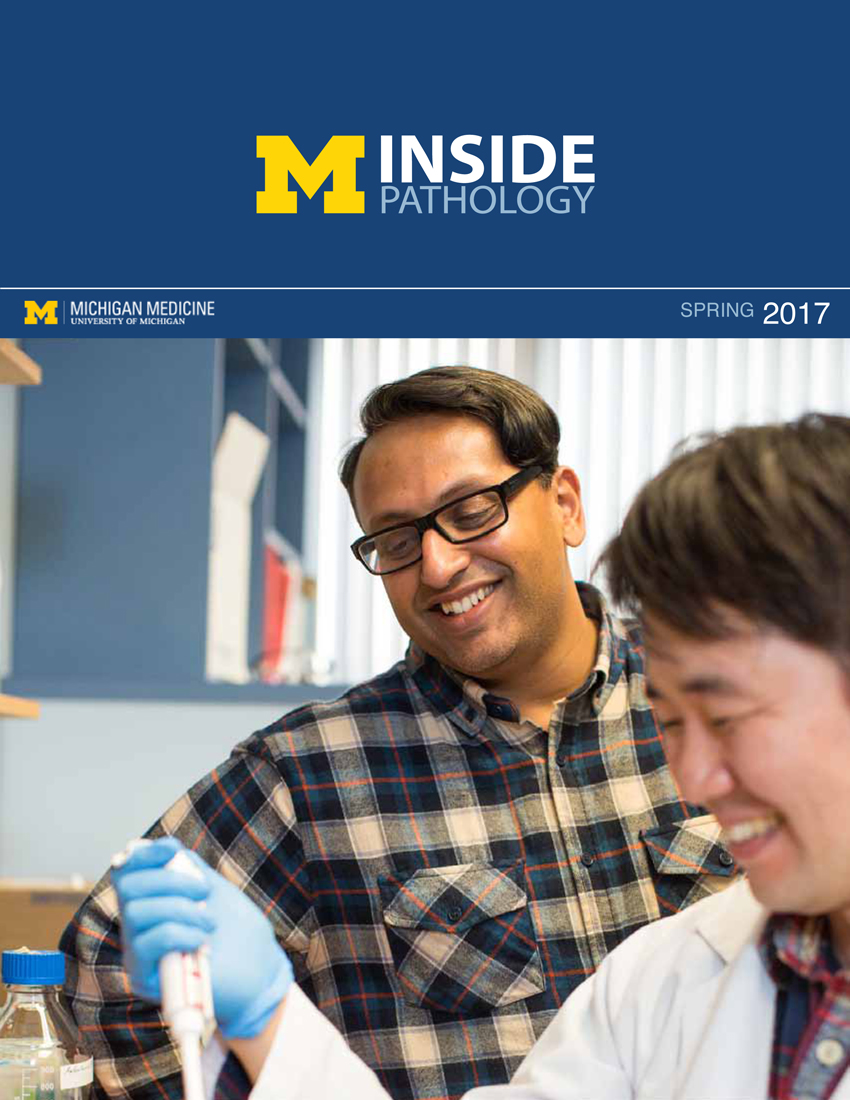 ON THE COVER
Dr. Sriram Venneti, MD, PhD and Postdoctoral Fellow, Chan Chung, PhD investigate pediatric brain cancer. See Article |
newsletter
INSIDE PATHOLOGYAbout Our NewsletterInside Pathology is an newsletter published by the Chairman's Office to bring news and updates from inside the department's research and to become familiar with those leading it. It is our hope that those who read it will enjoy hearing about those new and familiar, and perhaps help in furthering our research. CONTENTS
|
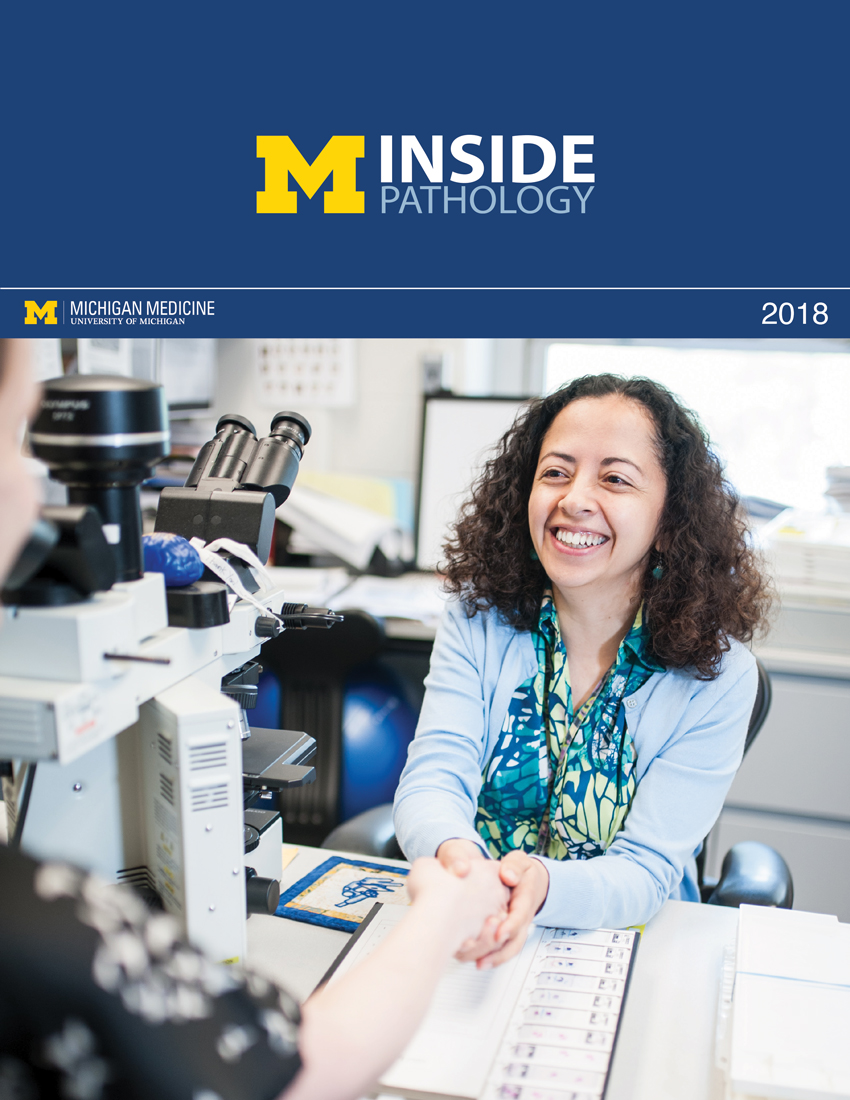 ON THE COVER
Director of the Neuropathology Fellowship, Dr. Sandra Camelo-Piragua serves on the Patient and Family Advisory Council. |
newsletter
INSIDE PATHOLOGYAbout Our NewsletterInside Pathology is an newsletter published by the Chairman's Office to bring news and updates from inside the department's research and to become familiar with those leading it. It is our hope that those who read it will enjoy hearing about those new and familiar, and perhaps help in furthering our research. CONTENTS
|
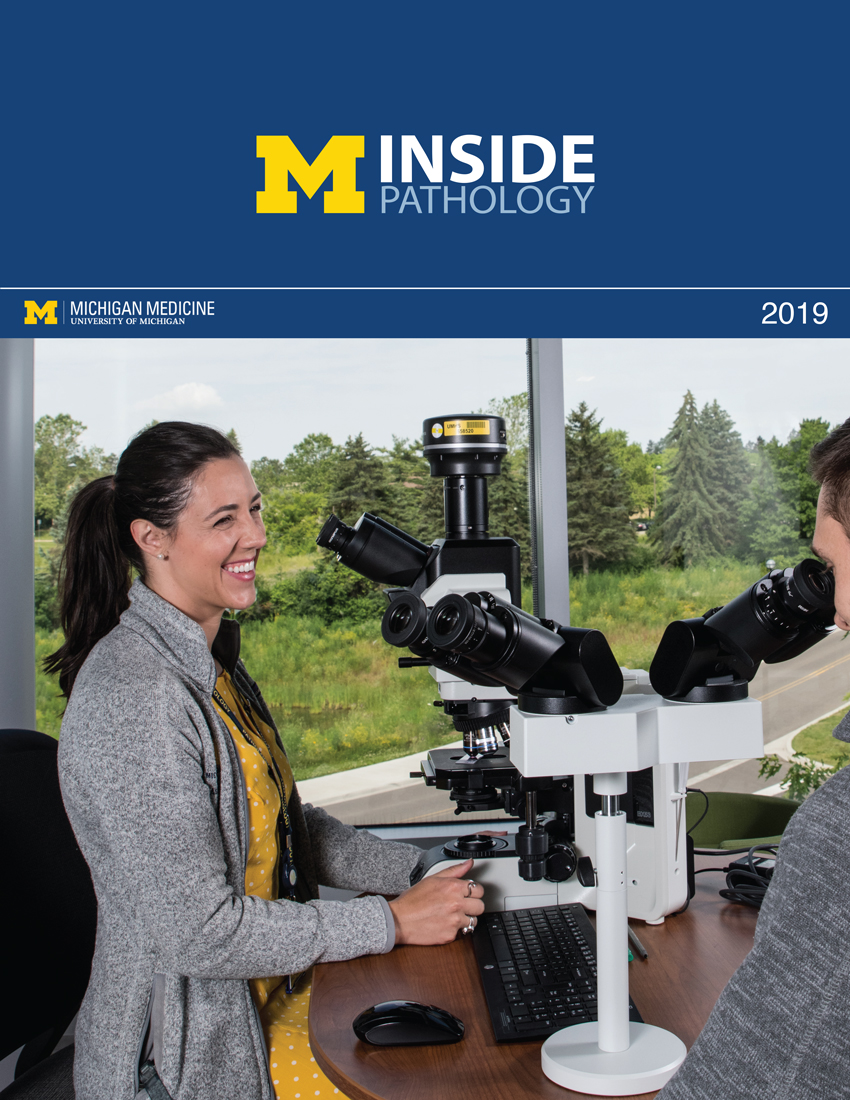 ON THE COVER
Residents Ashley Bradt (left) and William Perry work at a multi-headed scope in our new facility. |
newsletter
INSIDE PATHOLOGYAbout Our NewsletterInside Pathology is an newsletter published by the Chairman's Office to bring news and updates from inside the department's research and to become familiar with those leading it. It is our hope that those who read it will enjoy hearing about those new and familiar, and perhaps help in furthering our research. CONTENTS
|
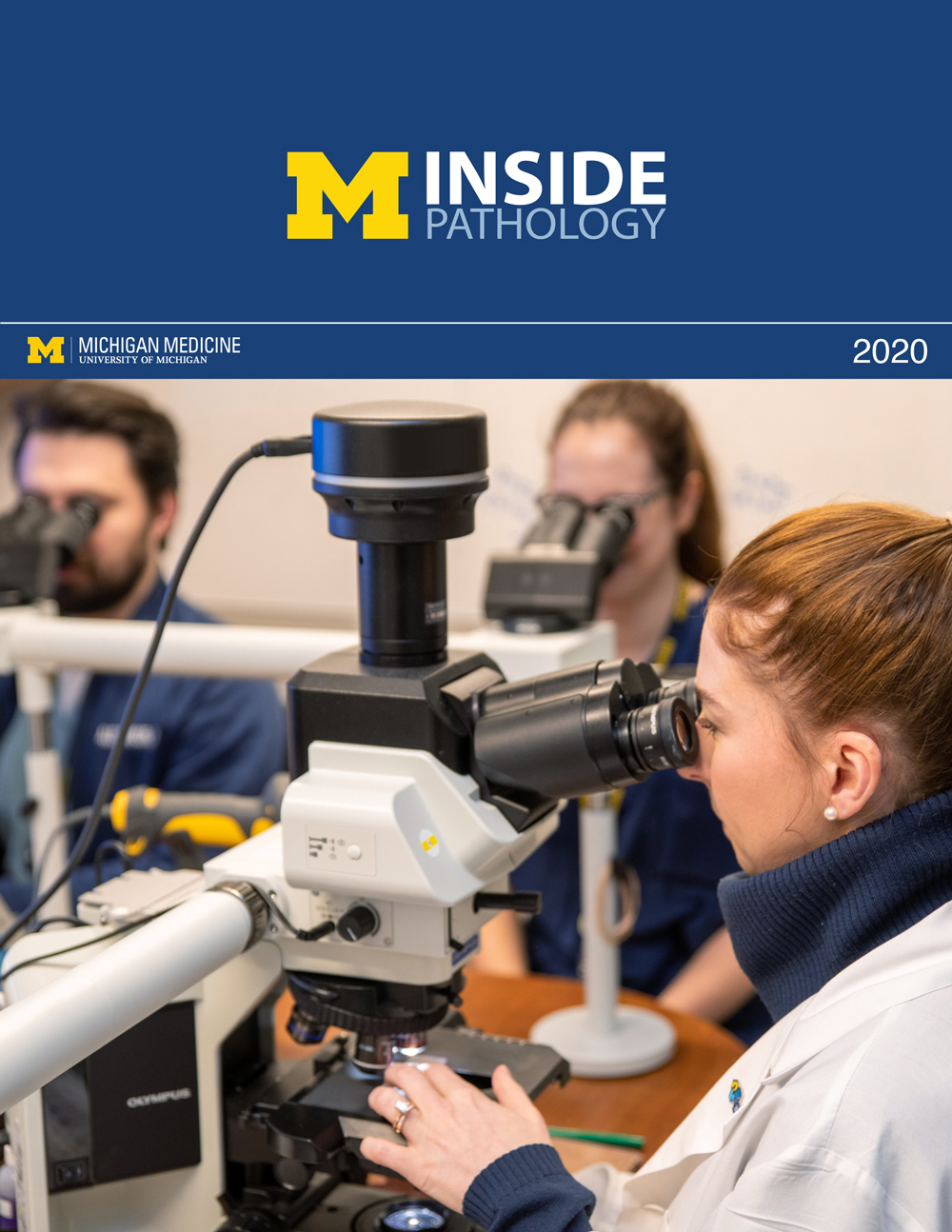 ON THE COVER
Dr. Kristine Konopka (right) instructing residents while using a multi-headed microscope. |
newsletter
INSIDE PATHOLOGYAbout Our NewsletterInside Pathology is an newsletter published by the Chairman's Office to bring news and updates from inside the department's research and to become familiar with those leading it. It is our hope that those who read it will enjoy hearing about those new and familiar, and perhaps help in furthering our research. CONTENTS
|
 ON THE COVER
Patient specimens poised for COVID-19 PCR testing. |
newsletter
INSIDE PATHOLOGYAbout Our NewsletterInside Pathology is an newsletter published by the Chairman's Office to bring news and updates from inside the department's research and to become familiar with those leading it. It is our hope that those who read it will enjoy hearing about those new and familiar, and perhaps help in furthering our research. CONTENTS
|
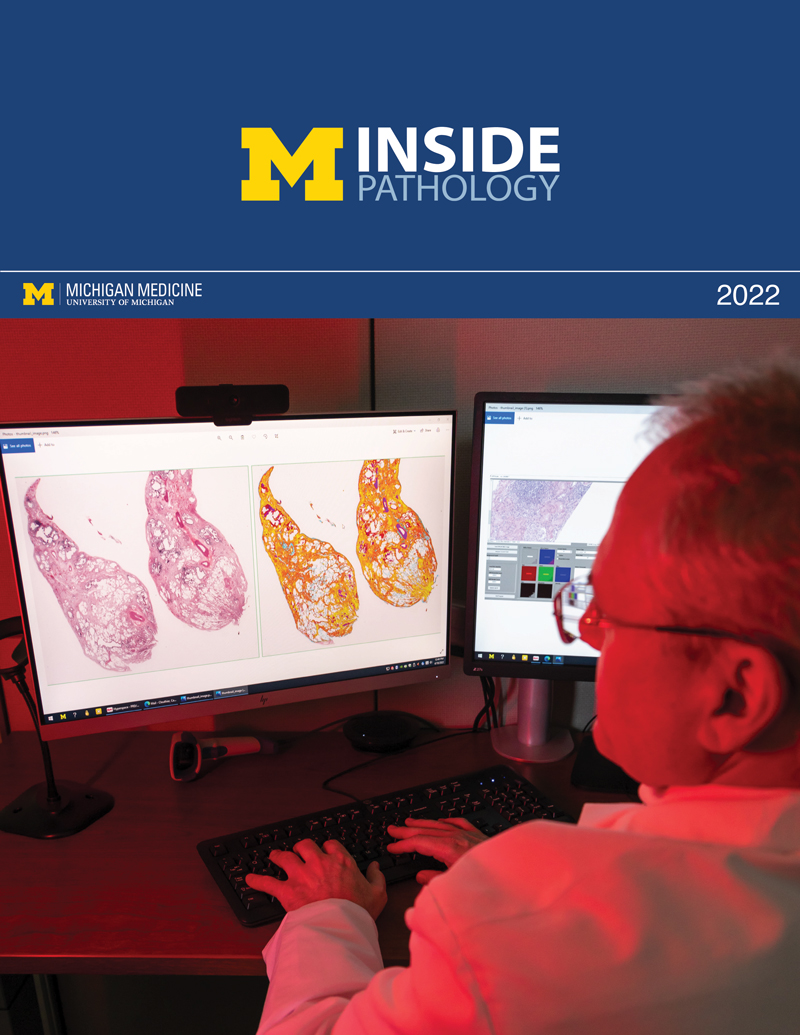 ON THE COVER
Dr. Pantanowitz demonstrates using machine learning in analyzing slides. |
newsletter
INSIDE PATHOLOGYAbout Our NewsletterInside Pathology is an newsletter published by the Chairman's Office to bring news and updates from inside the department's research and to become familiar with those leading it. It is our hope that those who read it will enjoy hearing about those new and familiar, and perhaps help in furthering our research. CONTENTS
|
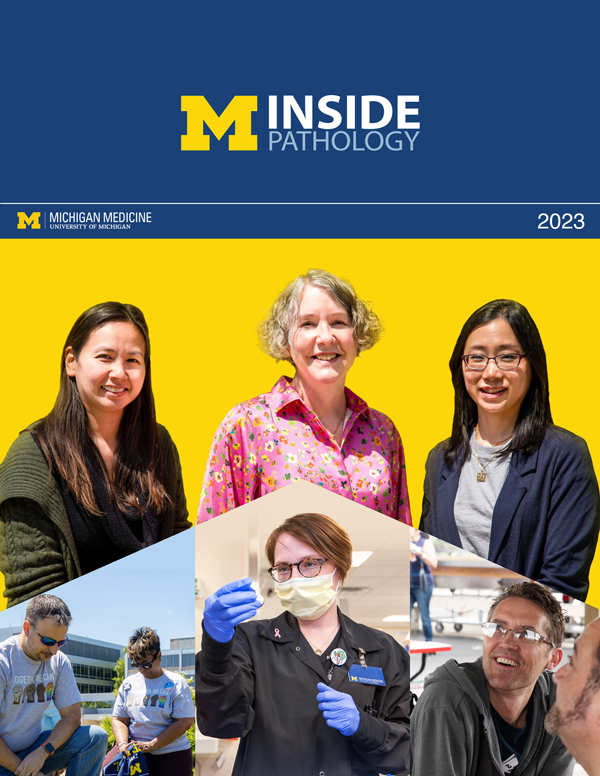 ON THE COVER
(Left to Right) Drs. Angela Wu, Laura Lamps, and Maria Westerhoff. |
newsletter
INSIDE PATHOLOGYAbout Our NewsletterInside Pathology is an newsletter published by the Chairman's Office to bring news and updates from inside the department's research and to become familiar with those leading it. It is our hope that those who read it will enjoy hearing about those new and familiar, and perhaps help in furthering our research. CONTENTS
|
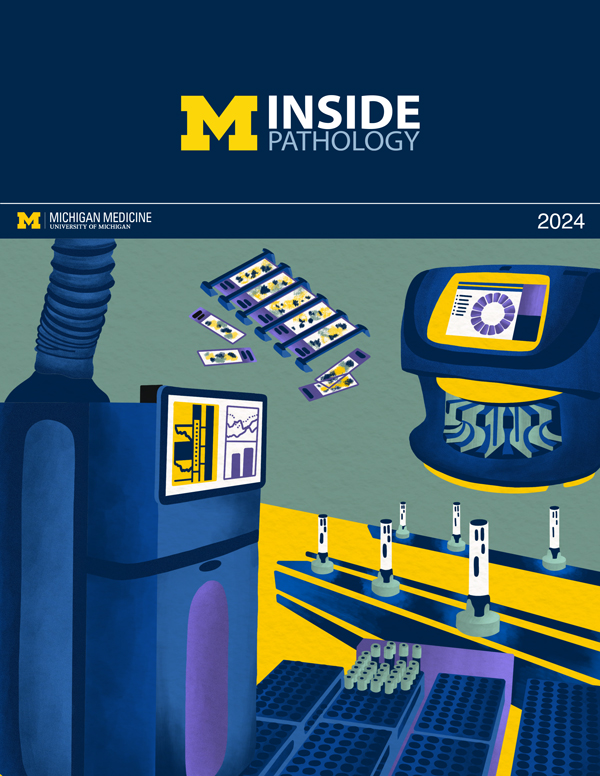 ON THE COVER
Illustration representing the various machines and processing used within our labs. |
newsletter
INSIDE PATHOLOGYAbout Our NewsletterInside Pathology is an newsletter published by the Chairman's Office to bring news and updates from inside the department's research and to become familiar with those leading it. It is our hope that those who read it will enjoy hearing about those new and familiar, and perhaps help in furthering our research. CONTENTS
|
 ON THE COVER
Rendering of the D. Dan and Betty Khn Health Care Pavilion. Credit: HOK |
newsletter
INSIDE PATHOLOGYAbout Our NewsletterInside Pathology is an newsletter published by the Chairman's Office to bring news and updates from inside the department's research and to become familiar with those leading it. It is our hope that those who read it will enjoy hearing about those new and familiar, and perhaps help in furthering our research. CONTENTS
|
MLabs, established in 1985, functions as a portal to provide pathologists, hospitals. and other reference laboratories access to the faculty, staff and laboratories of the University of Michigan Health System’s Department of Pathology. MLabs is a recognized leader for advanced molecular diagnostic testing, helpful consultants and exceptional customer service.