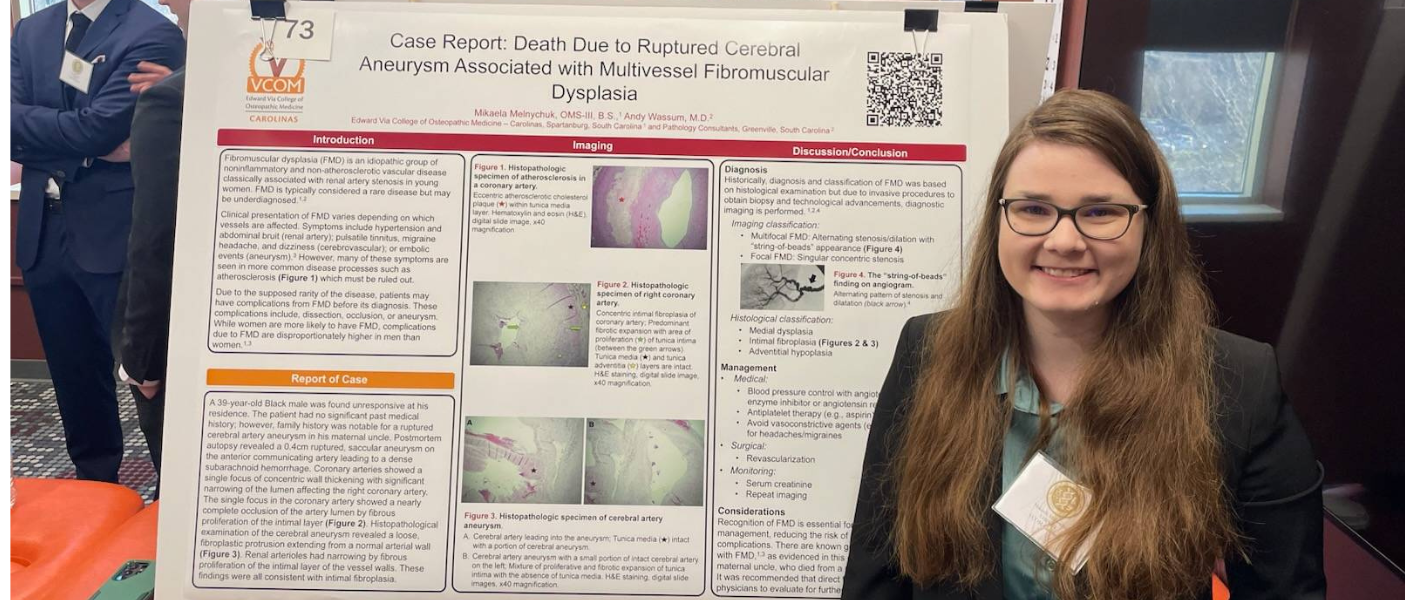
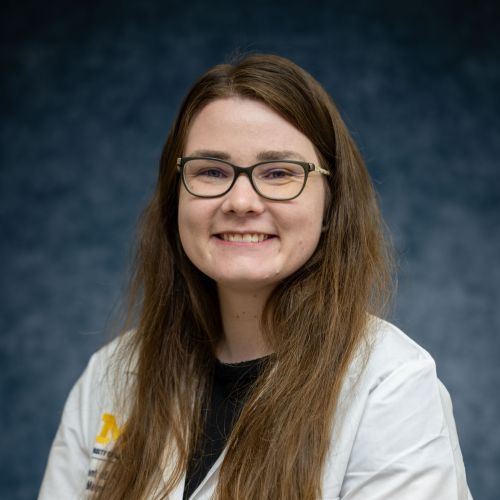
 When Mikaela Melnychuk, DO, began thinking seriously about a career in medicine, it was not from a textbook or a classroom lecture. It came from a deeply personal experience.
Melnychuk grew up in Georgia, in the northern metro Atlanta area, in a place she describes as being on the edge of suburbia and rural life. There was farmland nearby, time spent outdoors, and, occasionally, cows wandering through the yard after breaking through their fences.
She is also the first American-born member of her immediate family. Her parents and older brother are from Canada, and her parents later settled in Georgia, where they became business owners. During her teenage years, her family grew when her parents adopted her two younger brothers.
A Tragedy Leads to a Career Goal
For a while, Melnychuk was not sure what path she would take. But late in high school, after the unexpected death of a neighbor, she began to see medicine, and specifically pathology, as a way to help people understand some of life’s most difficult moments.
The neighbor who died was in his early 40s, and his daughter was one of the only girls Melnychuk’s age in the neighborhood. Watching the family grieve, and later seeing how an autopsy report helped provide answers, made a lasting impression.
“The autopsy report helps people go through a grieving process and gives them a little bit more information behind what has happened,” Melnychuk said, “and it also informed his kids about the possible things that they need to look out for in their future health.”
This led her to look into autopsies more deeply.
“Pretty much at that time, when I was 17 or 18, I did a little bit of research on who performs autopsies and found, ‘Oh, it’s pathologists,’” she said.
The more she learned, the more the field appealed to her. Melnychuk had always enjoyed deductive logic and reasoning games growing up, and pathology offered a way to apply that kind of thinking to medicine.
“I really liked the thought-provoking part of it,” she said. “I can use all these different stains and all this other information to come up with what the diagnosis is. It really fit with what I find intellectually fun and purposeful, being able to get to those answers.”
Cultivating Her Passion in Medical School
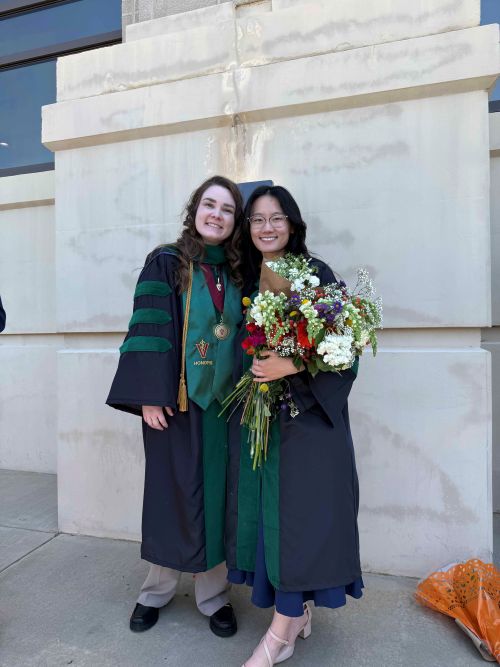 Melnychuk attended Edward Via College of Osteopathic Medicine, Carolinas Campus, also known as VCOM-Carolinas, in Spartanburg, South Carolina. During medical school, she followed the traditional path of two preclinical years followed by two clinical years, while continuing to seek out pathology experiences whenever possible.
One of the most important people in that process was her medical school mentor, Dr. Noel Brownlee, who helped foster her interest in pathology and connect her with opportunities.
“He definitely cultivated and fostered my passion to do pathology,” Melnychuk said. “He was very helpful at getting opportunities for me to get exposure to pathology.”
That exposure mattered, especially because pathology rotations and shadowing opportunities were not always easy to access. Melnychuk said that coming from a DO school sometimes meant she had to be proactive in finding pathology experiences, including reaching out to local pathologists and seeking out conferences and rotations.
Why Michigan?
 When it came time to choose a residency program, Melnychuk knew she wanted a large academic medical center. She was looking for the kind of academic environment she had not had direct access to during medical school; one that would offer broad exposure, strong training, and help her determine what kind of career she wanted to build.
“I wanted that large academic exposure,” she said, “just to have that experience and know later in my career what I want to do.”
The University of Michigan stood out for several reasons. Its academic strength was important, but so was the culture she observed during recruitment.
Across the open house, interview day, and second look, Melnychuk said she noticed the same thing again and again: people seemed to genuinely like one another.
“It was so consistent,” she said. “Everyone was actually good friends with each other, and it was obvious that people really liked each other and were not putting on a face.”
That mattered because residency is not just a training program, it is a place where residents spend long hours learning, working, and growing alongside one another.
“I’m going to be here for four years,” she said. “I’m going to be working with everybody for countless hours. So, I wanted it to be a nice atmosphere to work in and be friends with each other, not just coworkers.”
Family was another factor. Melnychuk’s brother lives in the Metro Detroit area, giving her a nearby support system as she begins residency.
First Impressions of Michigan Pathology
Now in her first weeks at Michigan, Melnychuk said her early impressions have confirmed what she sensed during the interview process.
“Everybody is really nice to each other and hangs out and are friends,” she said. “So, it’s good to know that they were not just putting on a facade throughout recruitment and interviewing.”
She has also noticed the broader hospital culture.
“People are always saying, ‘Hi,’ ‘Good morning,’ holding the doors open for each other,” she said. “The Midwestern hospitality of being very nice.”
Future Directions
As she begins her first year, Melnychuk is especially looking forward to autopsy pathology. Her current career goal is to pursue forensic pathology, the field that first drew her to medicine as a teenager. She is also interested in gaining early exposure to areas such as cardiovascular pathology and pediatric pathology, both of which could inform her future work.
“I’m looking forward to autopsy,” she said. “That is where my current interest lies.”
Although forensics remains her main interest, Melnychuk is also focused on building a strong foundation as a general pathologist.
“I just want to be a great general pathologist,” she said. “I like knowing all the other stuff that helps you be an excellent forensic pathologist, building the understanding of all the different organ systems separately and being able to put it all together.”
Teaching is a Goal
Teaching is another important part of the future she envisions. Because she experienced firsthand how challenging it can be for some medical students to access pathology rotations, she hopes to make herself available to students later in her career.
“I do want to have medical students around,” she said. “Coming from a DO school and trying to find my own rotations, specifically pathology rotations, and it being a little bit more difficult, having that availability for students is a goal.”
Melnychuk said she values mentors who are easy to communicate with, nonjudgmental, willing to help, and available when challenges arise. During residency, she hopes to learn not only pathology, but also how to become an effective mentor and educator.
“I’m interested in going into the educational part of medicine,” she said. “Learning from mentors how to effectively teach somebody — I definitely can grow in that area and want to grow in that area.”
Life Outside Medicine
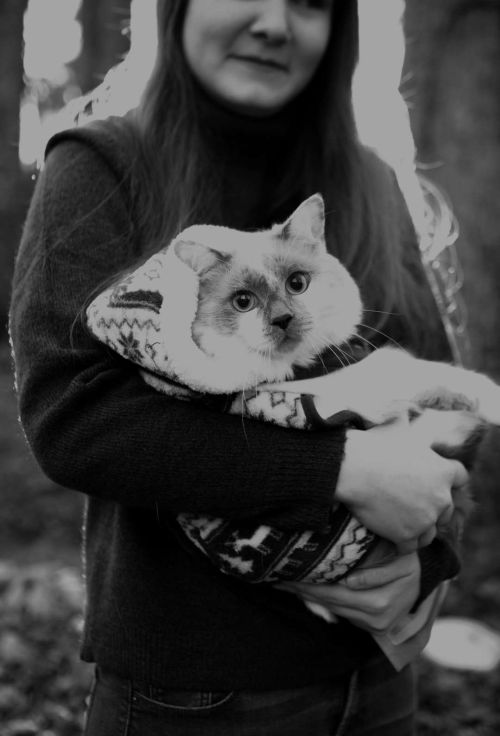
Outside of work, Melnychuk describes herself as something of a homebody. She enjoys cooking, baking, coffee, watching hockey, and spending time with her cat, Kya.
Her love of cooking and baking is a recurring theme. She is known among friends for buffalo chicken dip during football season, a Bailey’s chocolate cheesecake, and a “melt-in-your-mouth” pumpkin cookie that makes regular appearances around Canadian and American Thanksgiving.
“The secret is butter,” she said with a laugh.
She recently got a KitchenAid stand mixer and is already planning future baking projects, once she finishes testing whether her oven runs hot or cold.
Melnychuk is also a coffee enthusiast. She enjoys learning how to make different espresso drinks, experimenting with roasts, and dialing in her espresso machine. Latte art, she said, is still on the to-do list.
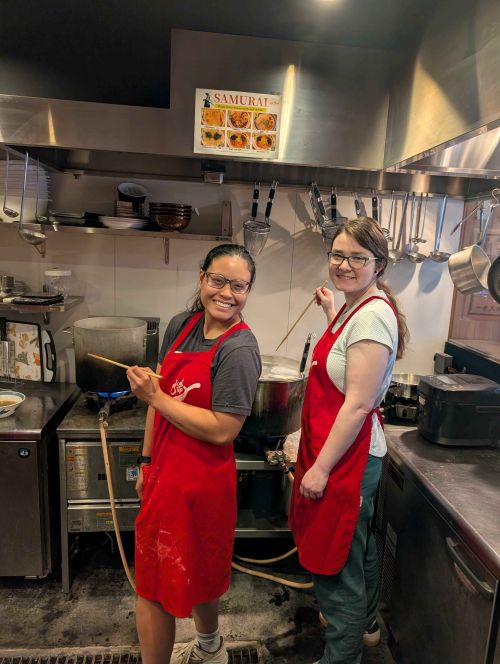
Travel, when time allows, often includes food. Before starting residency, she traveled to Japan and took a ramen and gyoza cooking class, which became one of the highlights of the trip.
“I loved it,” she said. “Being able to go and cook and experience culture from other places.”
Looking to the Future
 Her bucket list includes one day having a dream kitchen, complete with a large island, essential appliances, a great stove, and a dedicated espresso and coffee area.
As she settles into Michigan, Melnychuk is looking forward to exploring Detroit and the Upper Peninsula. She previously visited Detroit for her brother’s wedding and said the city made a strong impression.
“It is way different than what the rest of the U.S. says about Detroit,” she said. “I really enjoyed the architecture of downtown Detroit.”
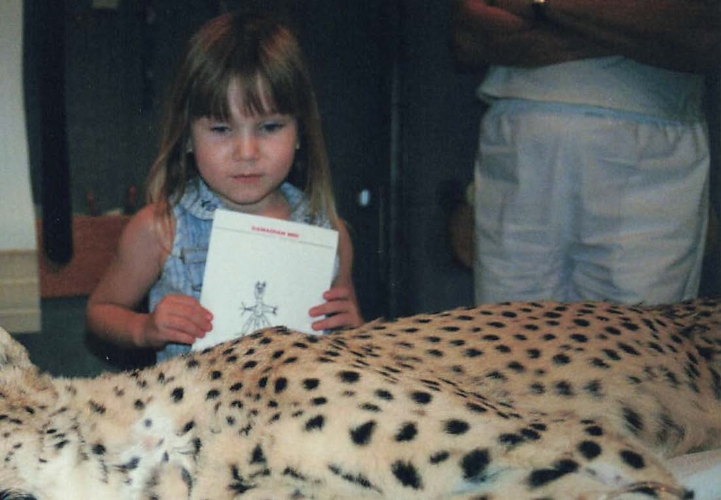
She also has a memorable fun fact: she once petted a cheetah. When she was young, her father managed an MRI clinic, and a local zoo needed imaging for a cheetah. The hospital in the area could not accommodate the animal, but the standalone clinic could. Her father agreed, with one condition.
“He said, ‘As long as my kids can come in, I don’t have a problem with it,’” Melnychuk recalled.
She vaguely remembers seeing the cheetah on the table and even drew a get-well card for her.
Advice for Medical Students
 For medical students considering pathology, Melnychuk’s advice is simple: be curious, be persistent, and seek out exposure however you can.
“Just show interest in pathology,” she said. “Try to see if there are any rotations around, and go to conferences, especially local conferences.”
She also encourages students not to be discouraged by roadblocks.
“Put yourself out there,” she said. “Sometimes you may hit some roadblocks, and it might be difficult, but as long as you keep trying and getting all the different possible exposures to pathology, I think that’s the best way of knowing what pathology is.”
For Melnychuk, pathology is much more than the “black box” medical students may imagine, where specimens are sent away and results come back. It is a field of reasoning, discovery, service, and answers.
Now, after years of working toward this goal, she is excited to begin the next chapter.
“I’m just excited to get to do what I’ve wanted to do since I was 17,” she said. “It’s been such a long time coming, getting to this position. I’m just so excited to finally be able to do what I have wanted to do for, I don’t know, 15 years.”
Welcome to Pathology, Dr. Melnychuk.
 ON THE COVER
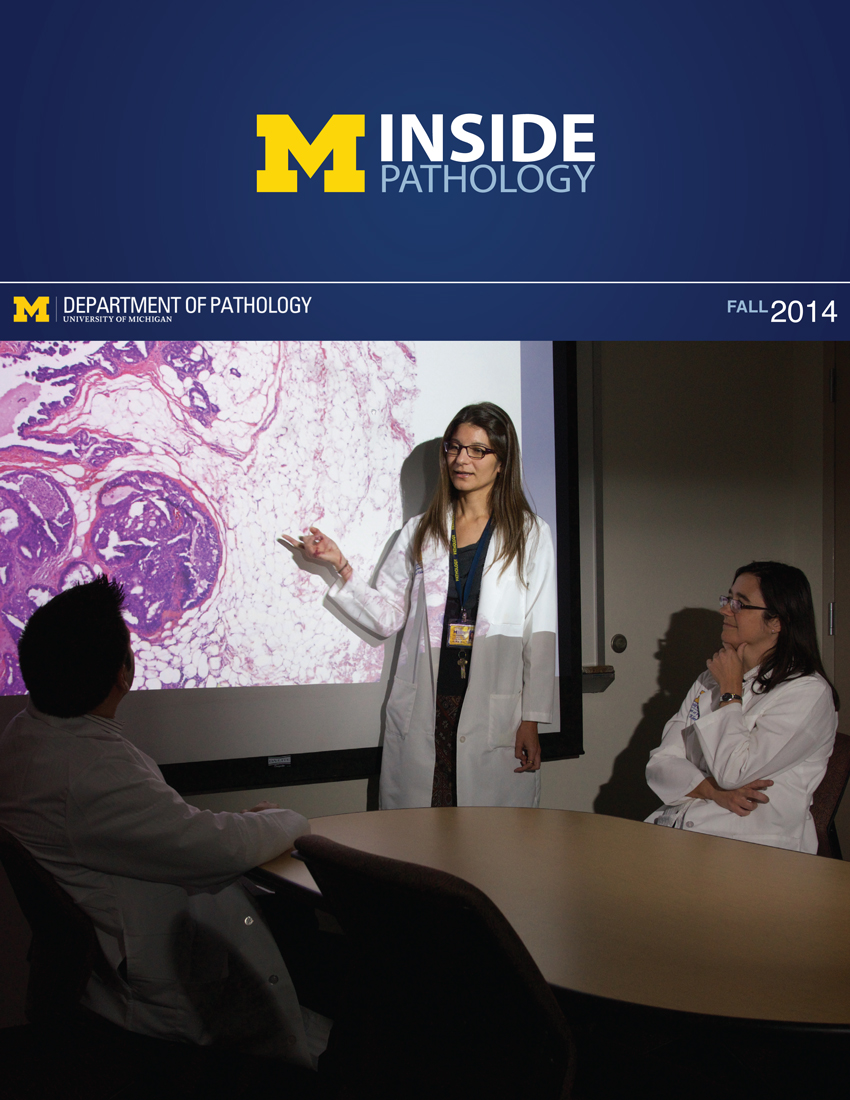
Breast team reviewing a patient's slide. (From left to right) Ghassan Allo, Fellow; Laura Walters, Clinical Lecturer; Celina Kleer, Professor. See Article |
newsletter
INSIDE PATHOLOGYAbout Our NewsletterInside Pathology is an newsletter published by the Chairman's Office to bring news and updates from inside the department's research and to become familiar with those leading it. It is our hope that those who read it will enjoy hearing about those new and familiar, and perhaps help in furthering our research. CONTENTS
|
 ON THE COVER
Autopsy Technician draws blood while working in the Wayne County morgue. See Article |
newsletter
INSIDE PATHOLOGYAbout Our NewsletterInside Pathology is an newsletter published by the Chairman's Office to bring news and updates from inside the department's research and to become familiar with those leading it. It is our hope that those who read it will enjoy hearing about those new and familiar, and perhaps help in furthering our research. CONTENTS
|
 ON THE COVER
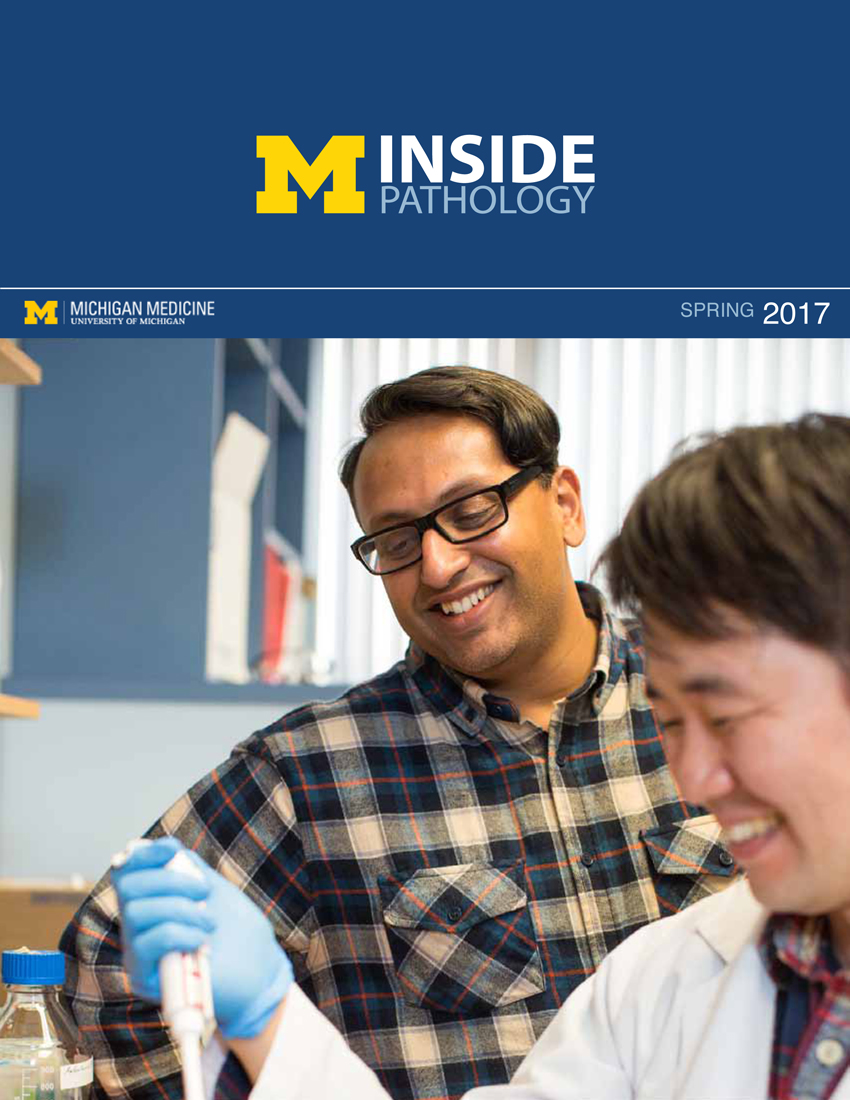
Dr. Sriram Venneti, MD, PhD and Postdoctoral Fellow, Chan Chung, PhD investigate pediatric brain cancer. See Article |
newsletter
INSIDE PATHOLOGYAbout Our NewsletterInside Pathology is an newsletter published by the Chairman's Office to bring news and updates from inside the department's research and to become familiar with those leading it. It is our hope that those who read it will enjoy hearing about those new and familiar, and perhaps help in furthering our research. CONTENTS
|
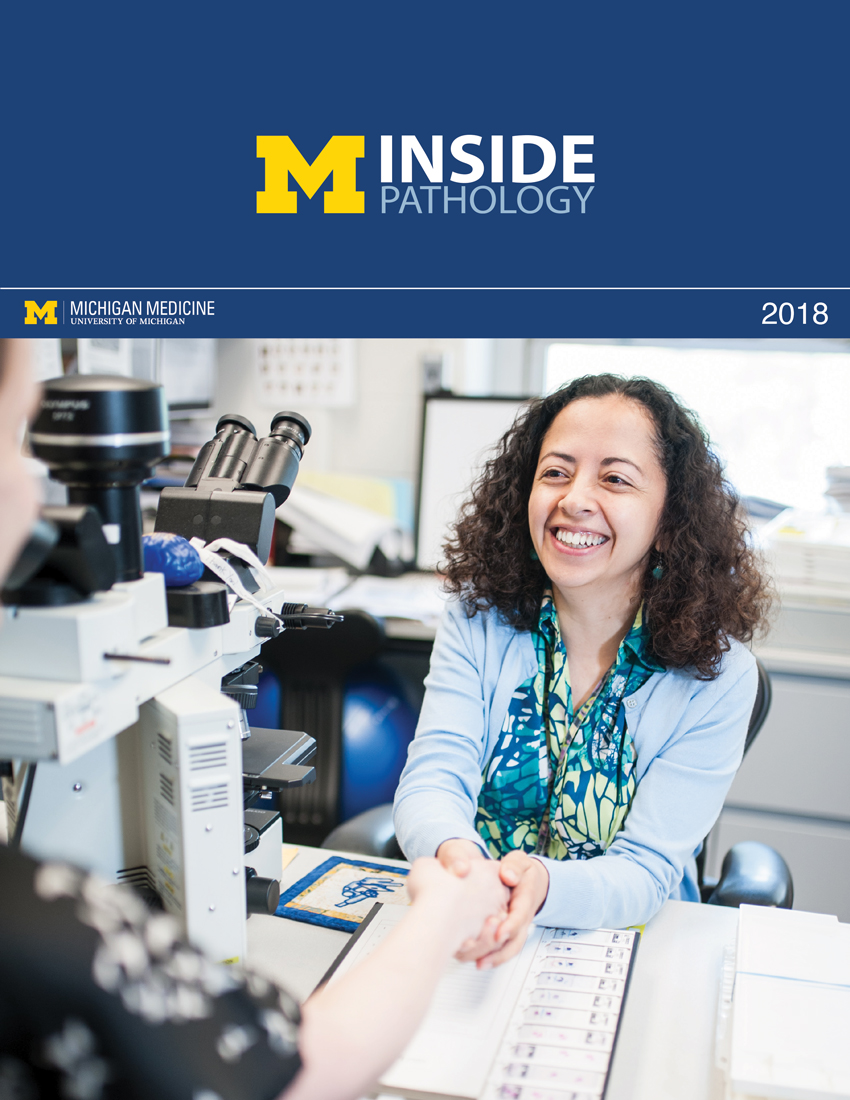 ON THE COVER
Director of the Neuropathology Fellowship, Dr. Sandra Camelo-Piragua serves on the Patient and Family Advisory Council. |
newsletter
INSIDE PATHOLOGYAbout Our NewsletterInside Pathology is an newsletter published by the Chairman's Office to bring news and updates from inside the department's research and to become familiar with those leading it. It is our hope that those who read it will enjoy hearing about those new and familiar, and perhaps help in furthering our research. CONTENTS
|
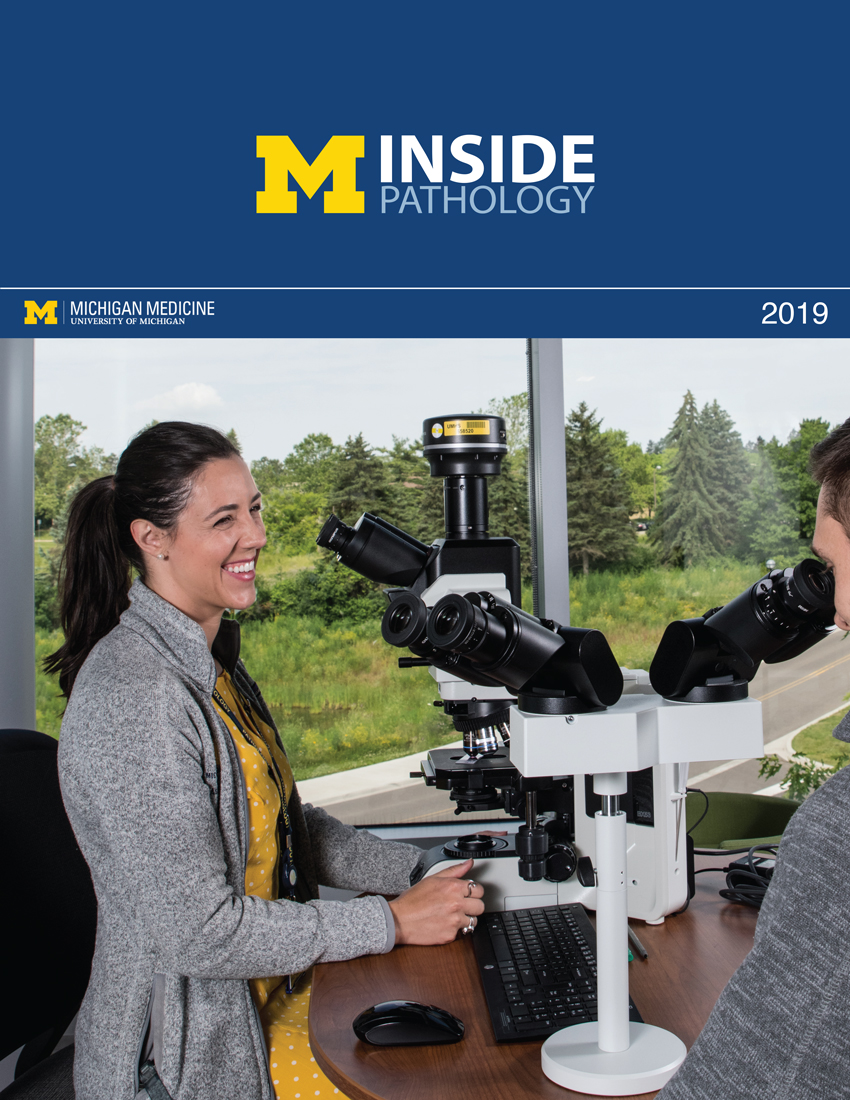 ON THE COVER
Residents Ashley Bradt (left) and William Perry work at a multi-headed scope in our new facility. |
newsletter
INSIDE PATHOLOGYAbout Our NewsletterInside Pathology is an newsletter published by the Chairman's Office to bring news and updates from inside the department's research and to become familiar with those leading it. It is our hope that those who read it will enjoy hearing about those new and familiar, and perhaps help in furthering our research. CONTENTS
|
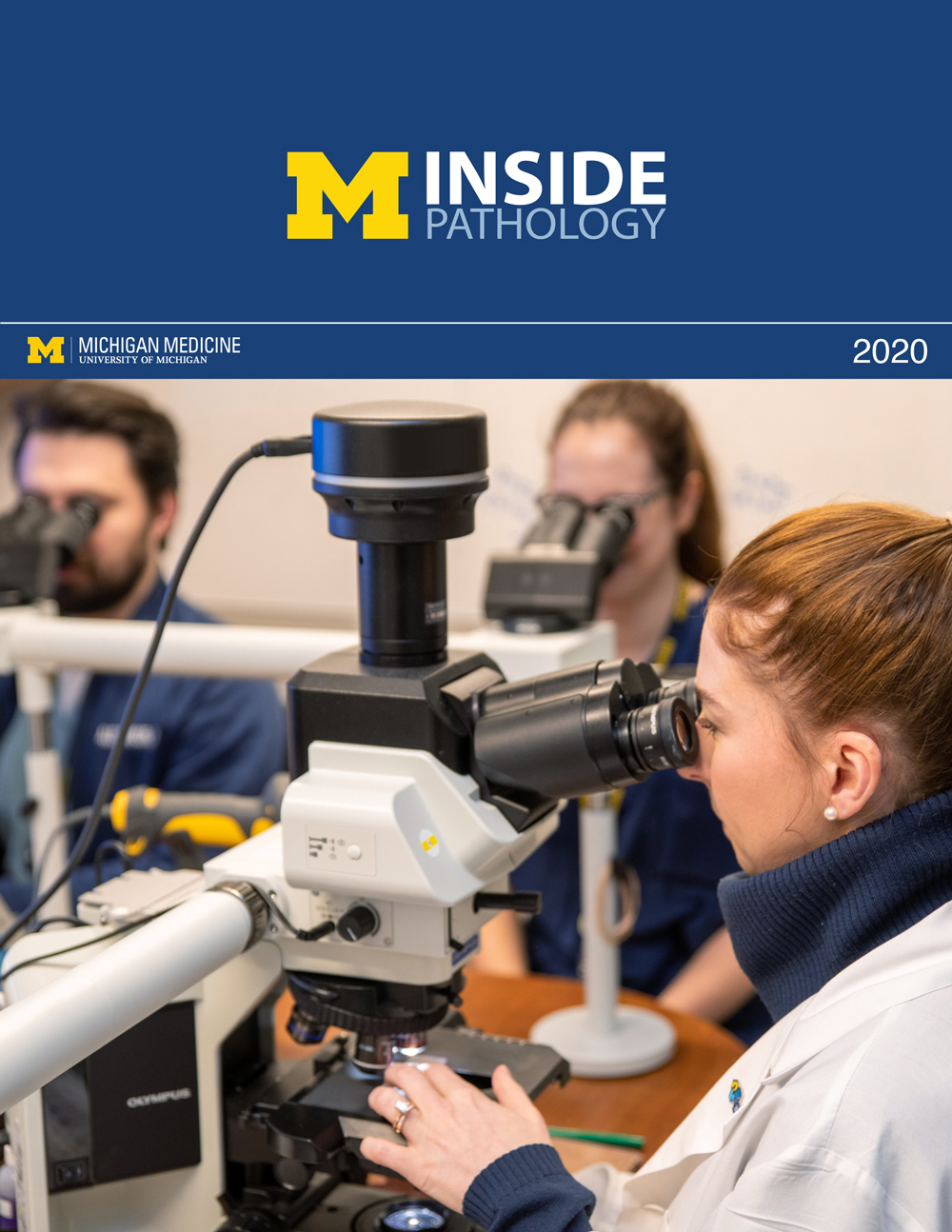 ON THE COVER
Dr. Kristine Konopka (right) instructing residents while using a multi-headed microscope. |
newsletter
INSIDE PATHOLOGYAbout Our NewsletterInside Pathology is an newsletter published by the Chairman's Office to bring news and updates from inside the department's research and to become familiar with those leading it. It is our hope that those who read it will enjoy hearing about those new and familiar, and perhaps help in furthering our research. CONTENTS
|
 ON THE COVER
Patient specimens poised for COVID-19 PCR testing. |
newsletter
INSIDE PATHOLOGYAbout Our NewsletterInside Pathology is an newsletter published by the Chairman's Office to bring news and updates from inside the department's research and to become familiar with those leading it. It is our hope that those who read it will enjoy hearing about those new and familiar, and perhaps help in furthering our research. CONTENTS
|
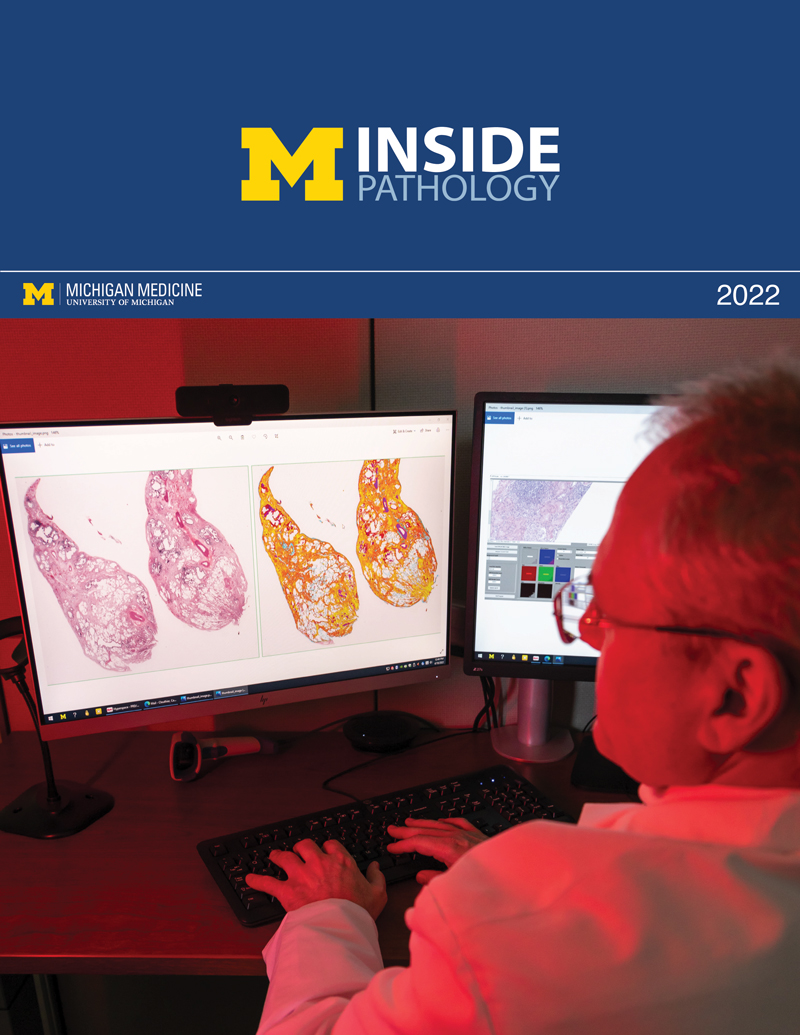 ON THE COVER
Dr. Pantanowitz demonstrates using machine learning in analyzing slides. |
newsletter
INSIDE PATHOLOGYAbout Our NewsletterInside Pathology is an newsletter published by the Chairman's Office to bring news and updates from inside the department's research and to become familiar with those leading it. It is our hope that those who read it will enjoy hearing about those new and familiar, and perhaps help in furthering our research. CONTENTS
|
 ON THE COVER
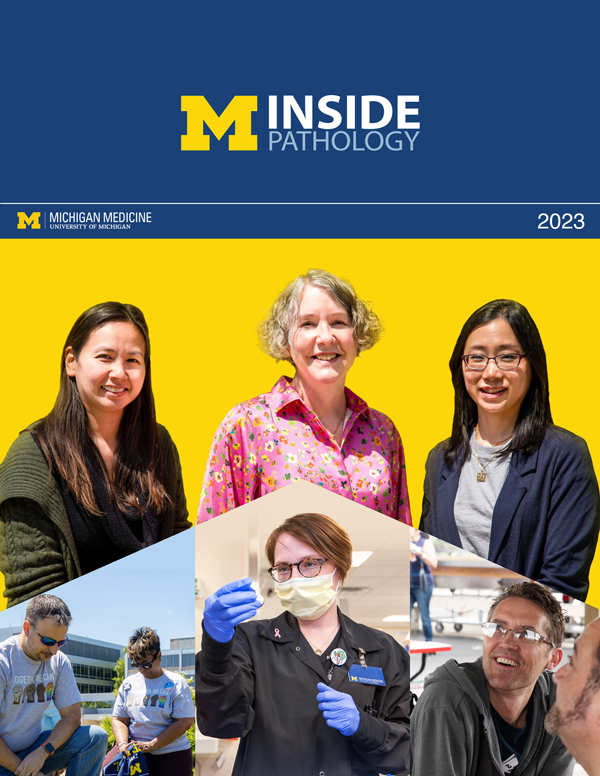
(Left to Right) Drs. Angela Wu, Laura Lamps, and Maria Westerhoff. |
newsletter
INSIDE PATHOLOGYAbout Our NewsletterInside Pathology is an newsletter published by the Chairman's Office to bring news and updates from inside the department's research and to become familiar with those leading it. It is our hope that those who read it will enjoy hearing about those new and familiar, and perhaps help in furthering our research. CONTENTS
|
 ON THE COVER
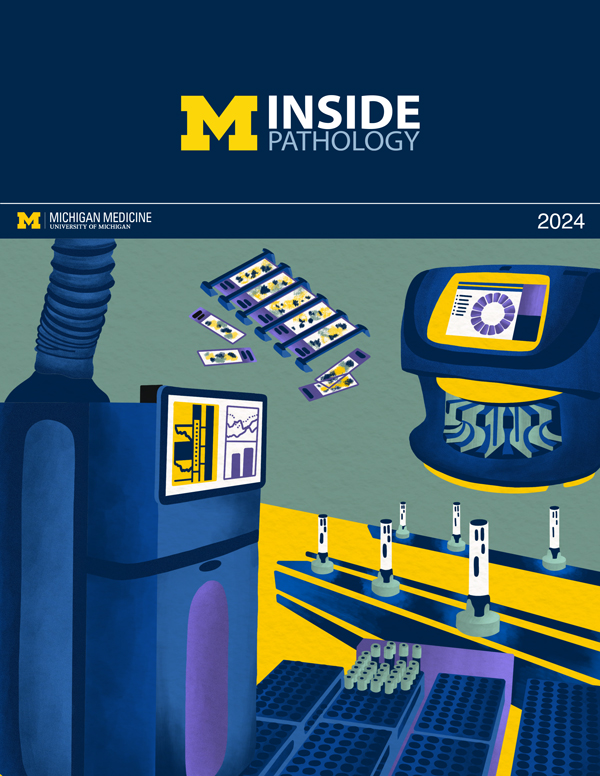
Illustration representing the various machines and processing used within our labs. |
newsletter
INSIDE PATHOLOGYAbout Our NewsletterInside Pathology is an newsletter published by the Chairman's Office to bring news and updates from inside the department's research and to become familiar with those leading it. It is our hope that those who read it will enjoy hearing about those new and familiar, and perhaps help in furthering our research. CONTENTS
|
 ON THE COVER
Rendering of the D. Dan and Betty Khn Health Care Pavilion. Credit: HOK |
newsletter
INSIDE PATHOLOGYAbout Our NewsletterInside Pathology is an newsletter published by the Chairman's Office to bring news and updates from inside the department's research and to become familiar with those leading it. It is our hope that those who read it will enjoy hearing about those new and familiar, and perhaps help in furthering our research. CONTENTS
|
MLabs, established in 1985, functions as a portal to provide pathologists, hospitals. and other reference laboratories access to the faculty, staff and laboratories of the University of Michigan Health System’s Department of Pathology. MLabs is a recognized leader for advanced molecular diagnostic testing, helpful consultants and exceptional customer service.