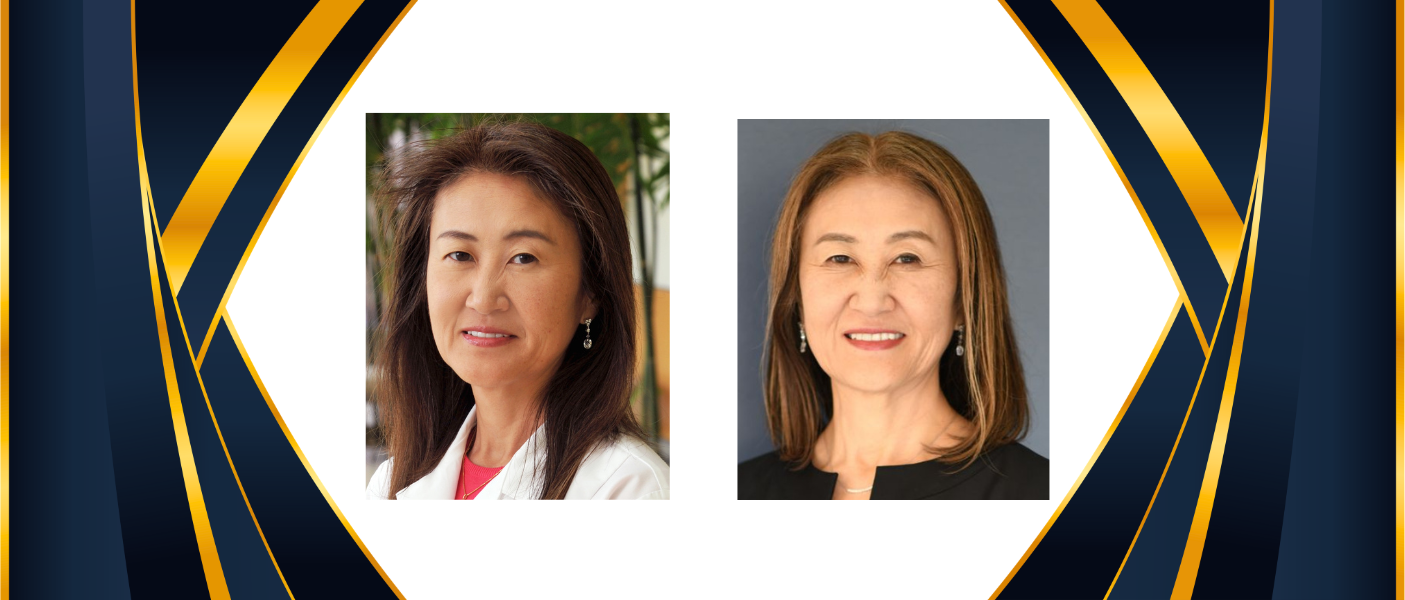
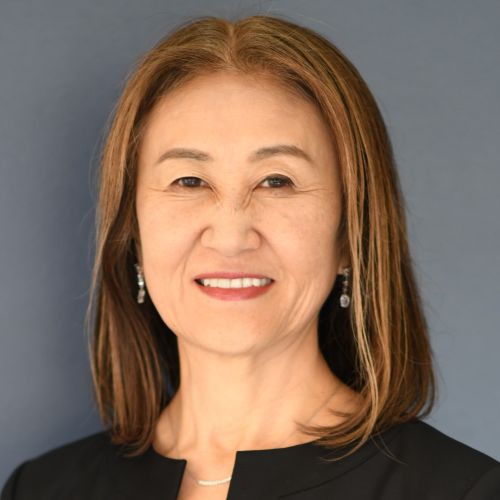
 For Dr. Chisa Yamada, the most meaningful moments in medicine were not found in the operating room or in research publications, but in quiet conversations with patients. After a career that spanned continents, specialties, and decades of clinical and academic work, it is those human connections that stand out most as she prepares to retire on July 19 as Clinical Professor of Pathology and Medical Director of the Apheresis Procedure Unit at Michigan Medicine.
Yamada’s path to Michigan Medicine began in Japan, where medicine was both a family tradition and a natural calling. Inspired by her physician father, she earned her medical degree from Tokyo Women’s Medical University, the only medical school in the world dedicated entirely to educating women to become physicians.
She began her career as an ophthalmologist, spending more than a decade performing surgeries and treating patients with complex eye conditions. She enjoyed treating the patients, especially, patients’ smiles after the cataract surgery were true joy. Yet even in those early years, she felt drawn to research and broader clinical impact.
“I wanted to do research,” she said. “But I didn’t have time. I needed to do something different.”
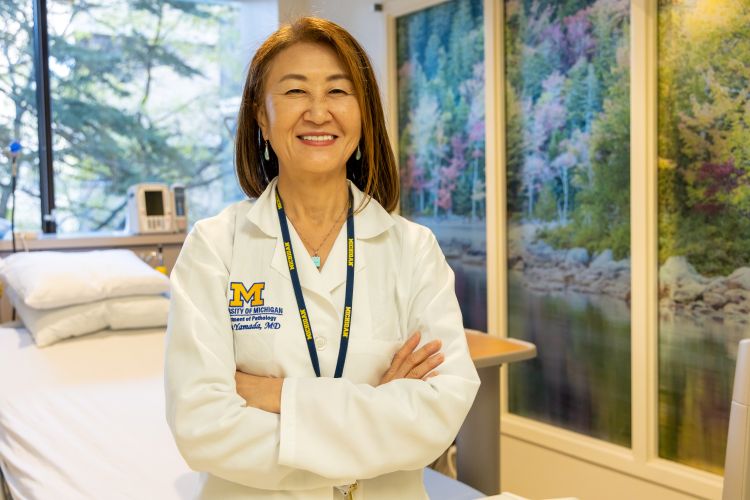 That desire led her to the United States, where she pursued research training before realizing that expanding her opportunities would require earning a U.S. medical license. She pivoted again, this time into pathology, where she could balance research, administrative expertise, and patient care. She completed her residency at Montefiore Medical Center/Albert Einstein College of Medicine and later a transfusion medicine fellowship at Johns Hopkins Medical Institutions.
It was at Johns Hopkins that Yamada found her professional home in transfusion medicine and apheresis, a specialty that uniquely blends patient interaction, laboratory science, and clinical research. She was exposed to plasma exchange support for incompatible kidney transplantations, a new and highly praised treatment for sensitized patients at that time. Since then, her biggest interest has been apheresis.
“Transfusion medicine is a very good combination of patient care, laboratory management, and research,” she said.
After a brief faculty position in California, Yamada joined Michigan Medicine in 2009, drawn by its reputation for academic excellence. What she found, and what ultimately kept her here for nearly two decades, was excellence in patient care, lots of opportunities for research, and something more personal.
“I like the Midwest,” she said. “People are very nice and decent. I have had a very good time here.”
During her tenure, Yamada built a career centered on apheresis, becoming a recognized leader in the field. She served as Medical Director of the Apheresis Procedure Unit and was elected to the board of directors for the American Society for Apheresis (ASFA), where she continues to serve.
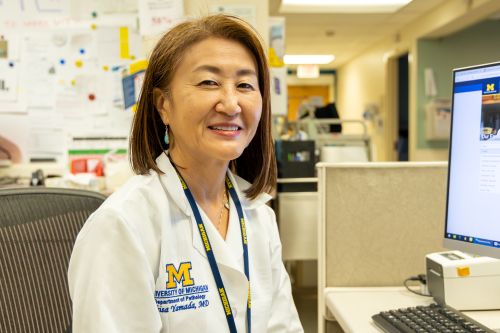 Her research contributions include numerous clinical studies in transfusion medicine, many of which were conducted in collaboration with institutions across the country and internationally. Among her most notable works is a widely recognized publication on transfusion-associated hypokalemia that was selected as a continuing medical education (CME) activity, extending its impact beyond academia into clinical practice.
Yet for Yamada, her greatest accomplishments are not measured solely in publications or titles.
“I think I am good at talking to patients,” she said. “Some patients ask to see me, even if I am not on call.”
That connection with patients remained a defining aspect of her work. Drawing on her early clinical training, she valued even brief interactions, listening carefully, understanding concerns, and helping each patient feel seen and supported.
Equally meaningful to her were her professional relationships, particularly within ASFA, which she describes as a “career home” where collaboration and shared purpose thrive. She has many colleagues who are dedicated to apheresis and knows most ASFA members in her generation. As part of her work with ASFA, she published a report with colleagues on apheresis procedures during the COVID-19 pandemic.
Yamada credits much of her success to the mentors who guided her along the way. At Johns Hopkins, Dr. Paul Ness provided foundational mentorship in transfusion medicine, while Dr. Karen King offered both professional guidance and personal support as Yamada navigated life and work in a new country.
Their influence helped her overcome the challenges of building a career as an international physician in the United States.
“I had many difficult times,” she said. “But every time I struggled, someone helped me.”
That experience shaped her enduring appreciation for the collaborative and supportive environment she found in the U.S., in ASFA and at Michigan Medicine.
“If you work hard and pursue what you want to do, someone will help you, I think that’s one of the best features of American culture and people” she said. “I really appreciate everyone.”
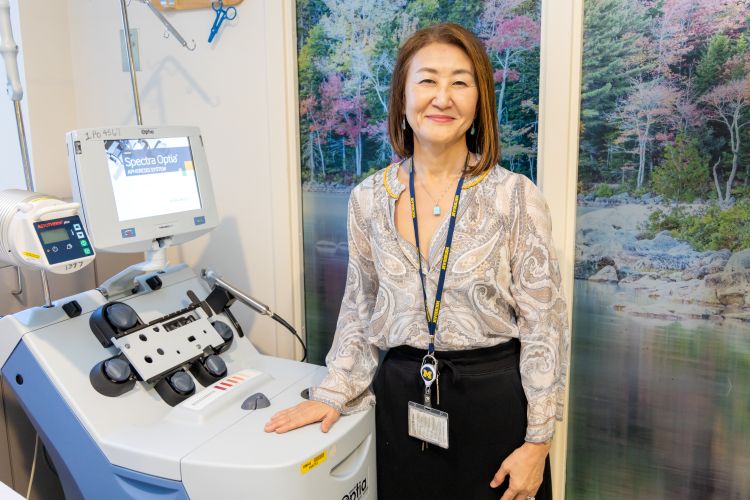 Because of her background, she is also committed to international education for apheresis. She is often invited to give talks at conferences hosted by the International Society for Apheresis (ISFA) and the Japanese Society for Apheresis (JSFA) and has served as a conference organizer for ISFA.
As she prepares for retirement, Yamada looks forward to a new chapter filled with travel and exploration. She and her husband plan to journey across the United States in a large RV, with additional trips planned to Europe and Asia. She also hopes to reconnect with her love of music and continue her involvement in research and professional service, including her ongoing role with ASFA.
Closer to home, she enjoys kayaking, floating along rivers near her seasonal campsite or on the Huron River, embracing the balance and reflection that come with time spent on the water.
Her decision to retire comes at a moment of transition. Originally, it was to care for her mother, who recently passed away. Despite her original reason for retirement no longer a factor, Yamada knows this is the right time to transition.
“It’s time for me,” she said. “Time to pass my work to the next generation.”
Even as she steps away from her full-time role, Dr. Chisa Yamada will remain an Active Emerita Professor and continue her research with her young colleagues and residents. As she transitions out of the department, her legacy of compassionate care will continue on, reflected not only in her professional accomplishments but also in the many lives she has touched along the way.
Citations:
Chisa Yamada, Maureen F. Edelson, Agnela C. Lee, Nabiha H. Saifee, Ivo D. Dinov. Transfusion-associated hyperkalemia in pediatric population: Analyses for risk factors and recommendations. Transfusion 2022, 62(12):2503-2514. https://doi.org/10.1111/trf.17135.
Chisa Yamada, Jan C. Hoffmann, Volker Witt, Guarav K. Gupta, Jeffrey L. Winters, The ASFA COVID-19 Taskforce. The report from ASFA COVID-19 taskforce: Considerations and prioritization on apheresis procedures during the SARS-CoV-2 coronavirus disease (COVID-19) pandemic. J Clin Apher 2021 Sept 12, 36(6):878-881. https://doi.org/10.1002/jca.21939.
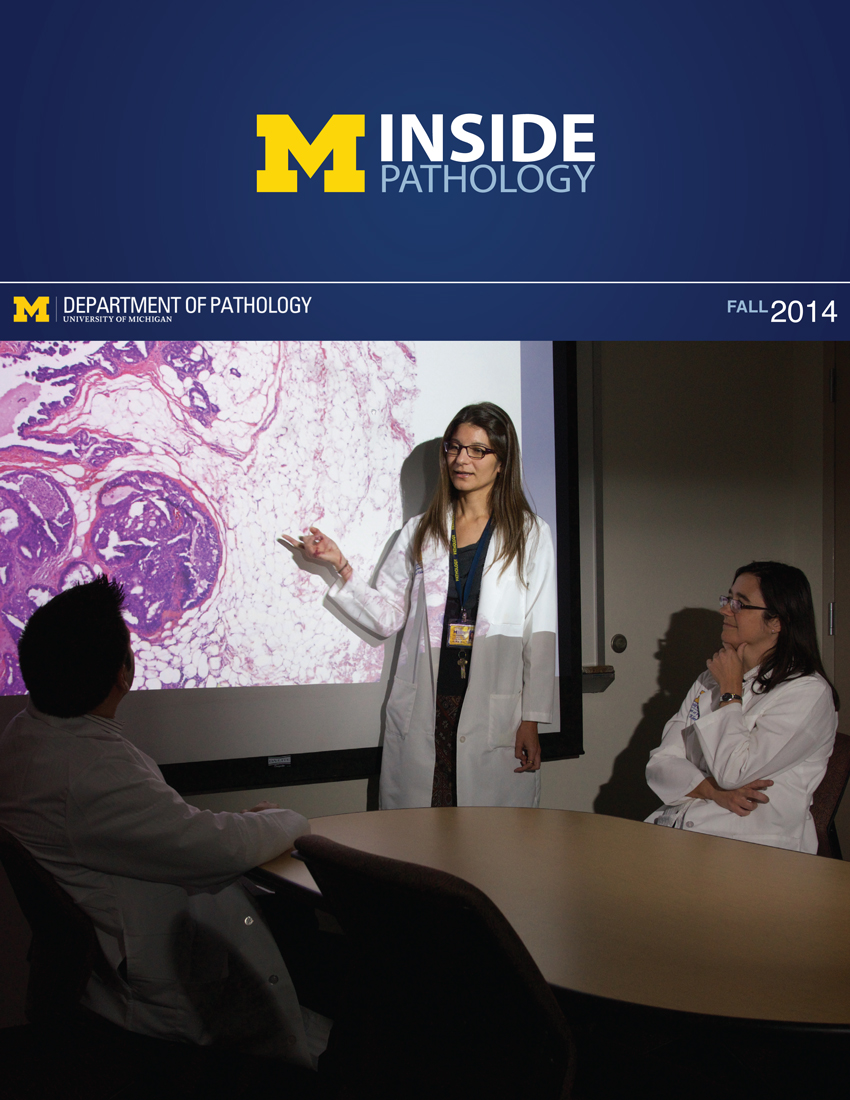 ON THE COVER
Breast team reviewing a patient's slide. (From left to right) Ghassan Allo, Fellow; Laura Walters, Clinical Lecturer; Celina Kleer, Professor. See Article |
newsletter
INSIDE PATHOLOGYAbout Our NewsletterInside Pathology is an newsletter published by the Chairman's Office to bring news and updates from inside the department's research and to become familiar with those leading it. It is our hope that those who read it will enjoy hearing about those new and familiar, and perhaps help in furthering our research. CONTENTS
|
 ON THE COVER
Autopsy Technician draws blood while working in the Wayne County morgue. See Article |
newsletter
INSIDE PATHOLOGYAbout Our NewsletterInside Pathology is an newsletter published by the Chairman's Office to bring news and updates from inside the department's research and to become familiar with those leading it. It is our hope that those who read it will enjoy hearing about those new and familiar, and perhaps help in furthering our research. CONTENTS
|
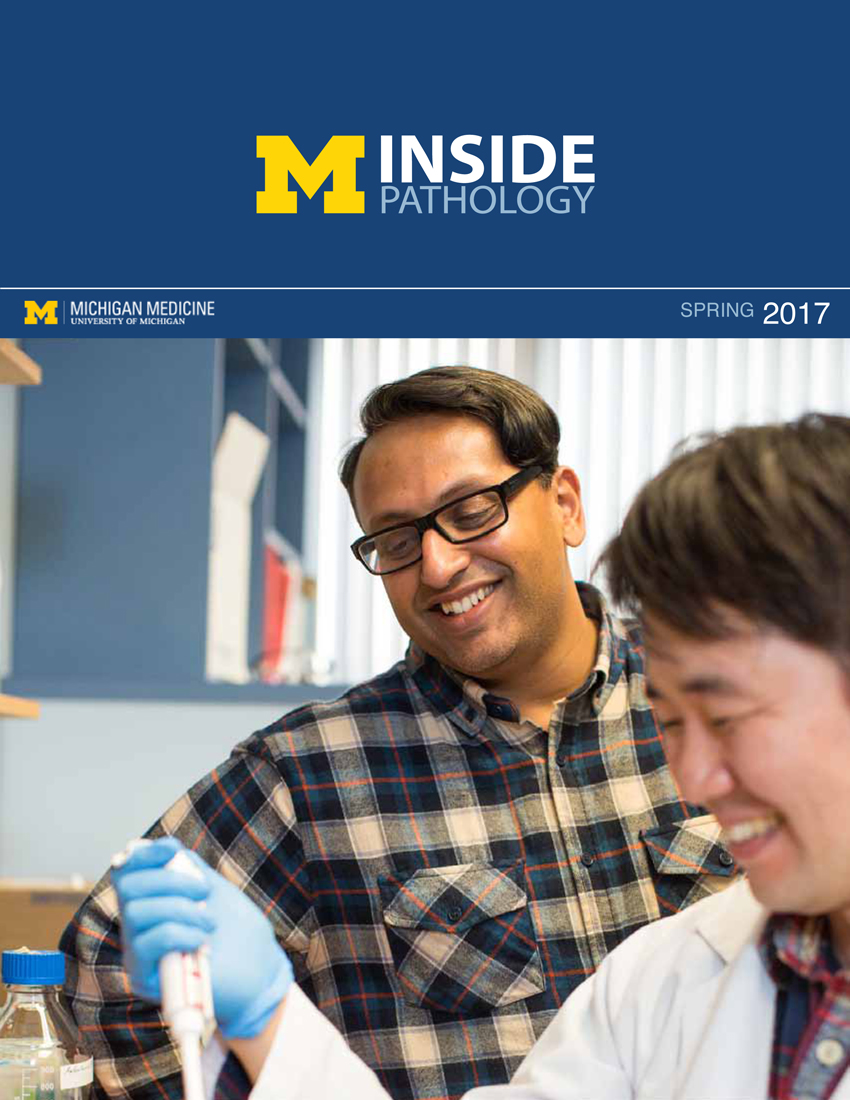 ON THE COVER
Dr. Sriram Venneti, MD, PhD and Postdoctoral Fellow, Chan Chung, PhD investigate pediatric brain cancer. See Article |
newsletter
INSIDE PATHOLOGYAbout Our NewsletterInside Pathology is an newsletter published by the Chairman's Office to bring news and updates from inside the department's research and to become familiar with those leading it. It is our hope that those who read it will enjoy hearing about those new and familiar, and perhaps help in furthering our research. CONTENTS
|
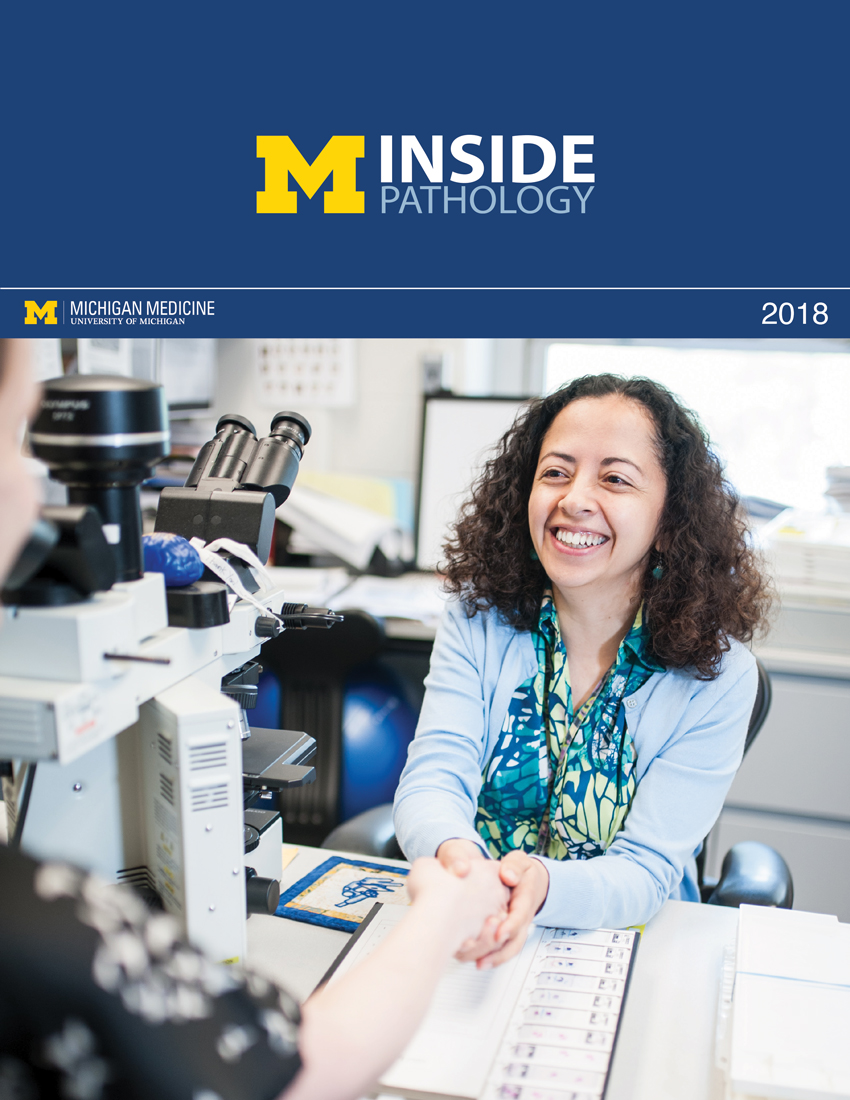 ON THE COVER
Director of the Neuropathology Fellowship, Dr. Sandra Camelo-Piragua serves on the Patient and Family Advisory Council. |
newsletter
INSIDE PATHOLOGYAbout Our NewsletterInside Pathology is an newsletter published by the Chairman's Office to bring news and updates from inside the department's research and to become familiar with those leading it. It is our hope that those who read it will enjoy hearing about those new and familiar, and perhaps help in furthering our research. CONTENTS
|
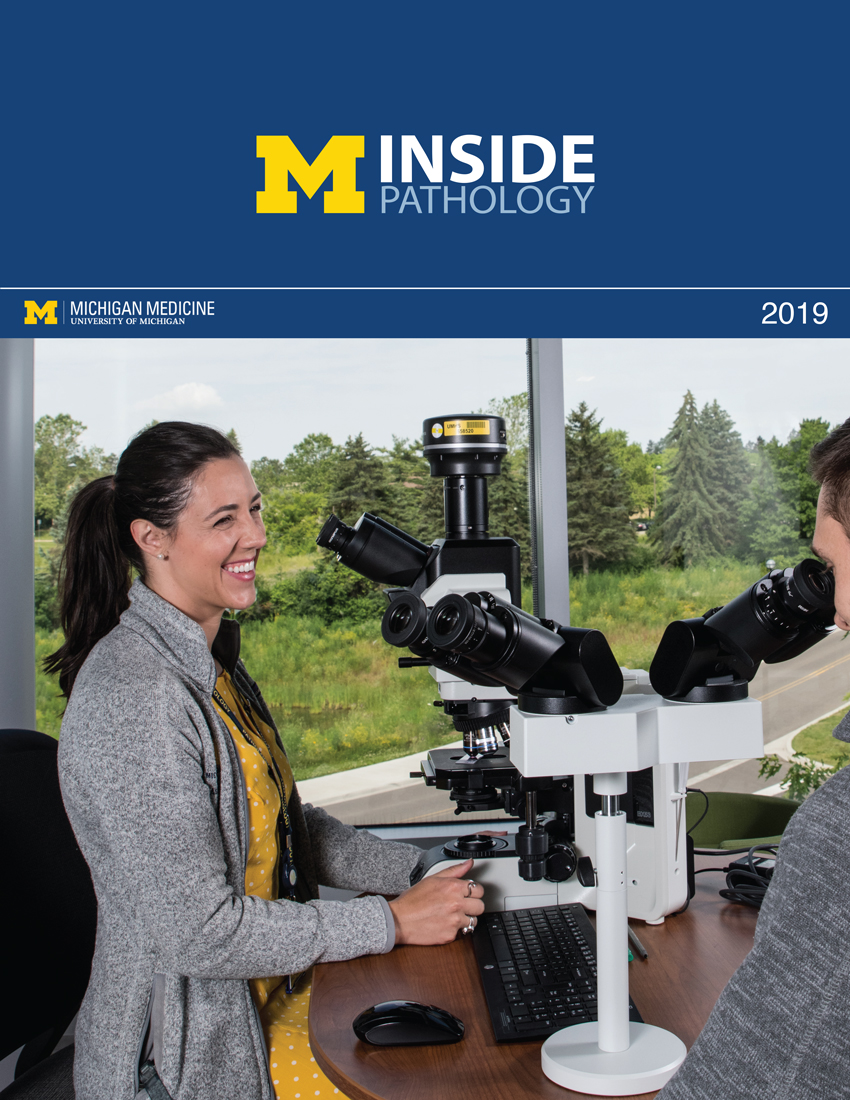 ON THE COVER
Residents Ashley Bradt (left) and William Perry work at a multi-headed scope in our new facility. |
newsletter
INSIDE PATHOLOGYAbout Our NewsletterInside Pathology is an newsletter published by the Chairman's Office to bring news and updates from inside the department's research and to become familiar with those leading it. It is our hope that those who read it will enjoy hearing about those new and familiar, and perhaps help in furthering our research. CONTENTS
|
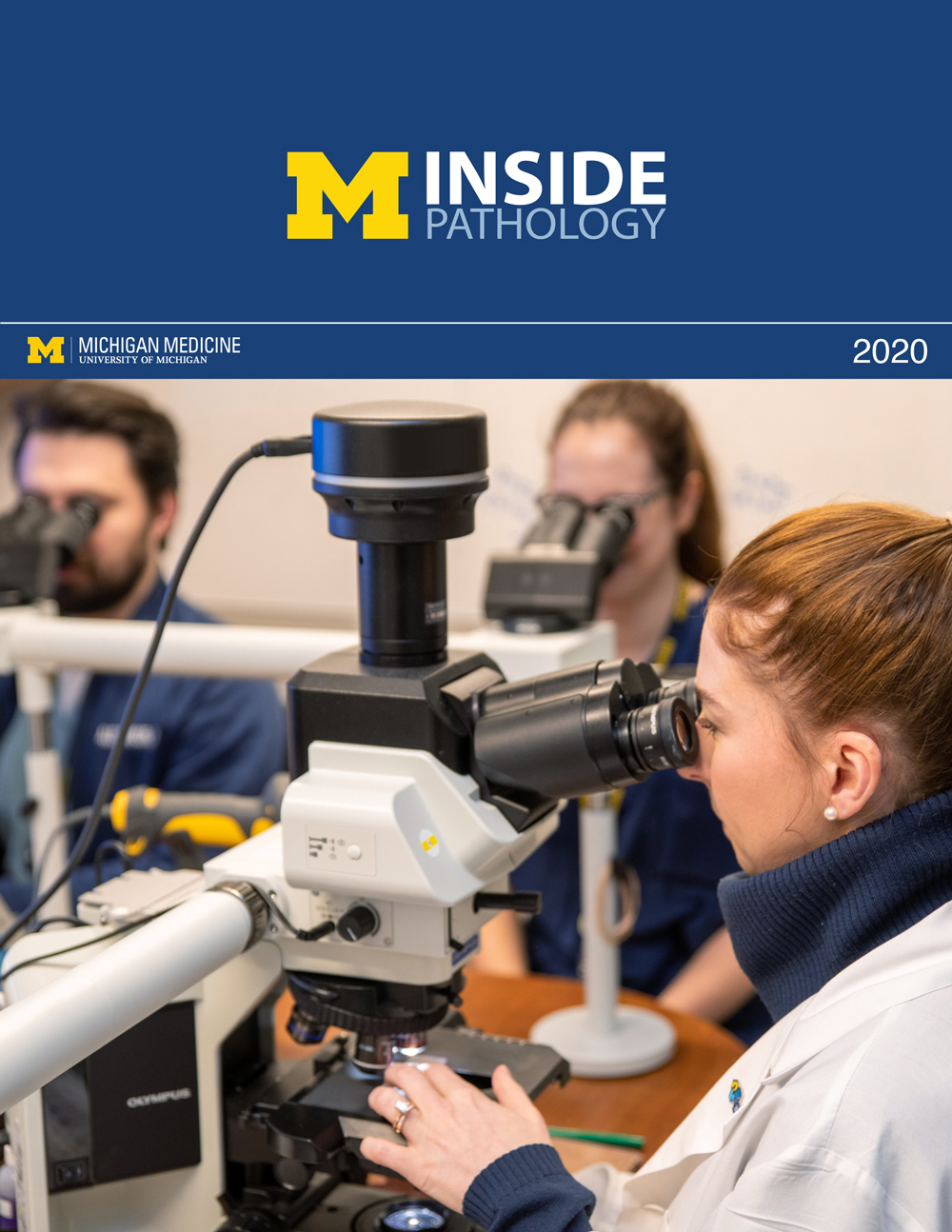 ON THE COVER
Dr. Kristine Konopka (right) instructing residents while using a multi-headed microscope. |
newsletter
INSIDE PATHOLOGYAbout Our NewsletterInside Pathology is an newsletter published by the Chairman's Office to bring news and updates from inside the department's research and to become familiar with those leading it. It is our hope that those who read it will enjoy hearing about those new and familiar, and perhaps help in furthering our research. CONTENTS
|
 ON THE COVER
Patient specimens poised for COVID-19 PCR testing. |
newsletter
INSIDE PATHOLOGYAbout Our NewsletterInside Pathology is an newsletter published by the Chairman's Office to bring news and updates from inside the department's research and to become familiar with those leading it. It is our hope that those who read it will enjoy hearing about those new and familiar, and perhaps help in furthering our research. CONTENTS
|
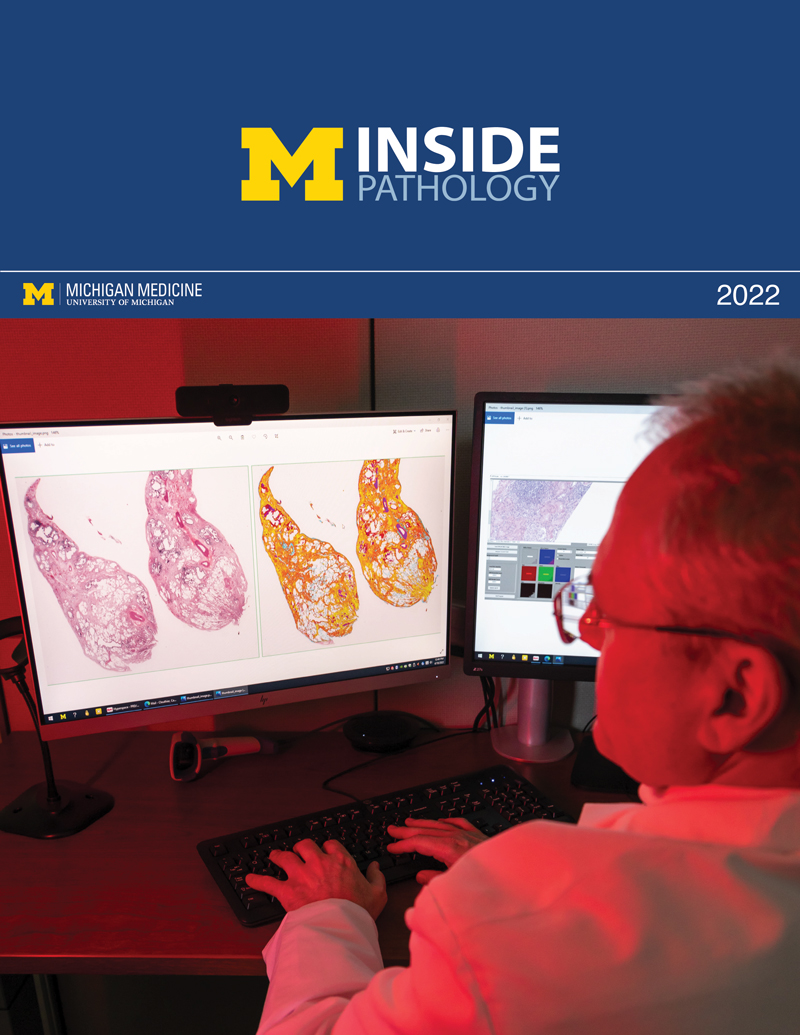 ON THE COVER
Dr. Pantanowitz demonstrates using machine learning in analyzing slides. |
newsletter
INSIDE PATHOLOGYAbout Our NewsletterInside Pathology is an newsletter published by the Chairman's Office to bring news and updates from inside the department's research and to become familiar with those leading it. It is our hope that those who read it will enjoy hearing about those new and familiar, and perhaps help in furthering our research. CONTENTS
|
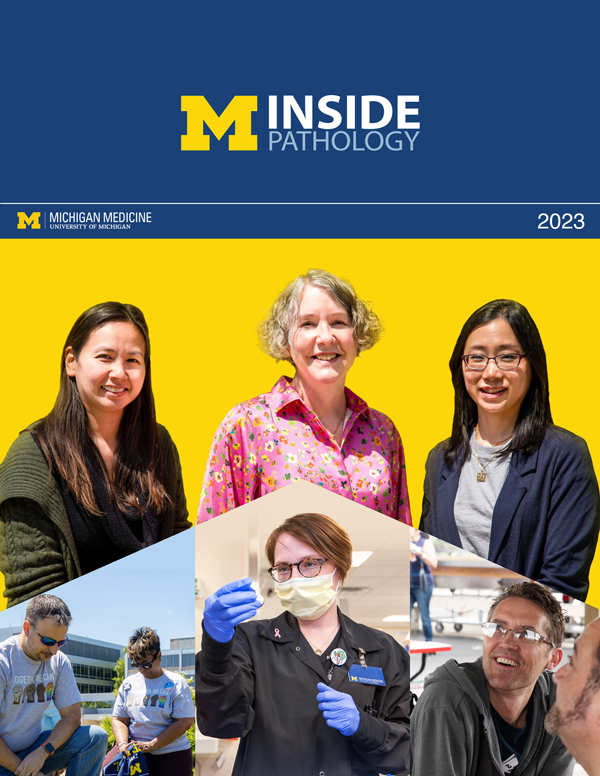 ON THE COVER
(Left to Right) Drs. Angela Wu, Laura Lamps, and Maria Westerhoff. |
newsletter
INSIDE PATHOLOGYAbout Our NewsletterInside Pathology is an newsletter published by the Chairman's Office to bring news and updates from inside the department's research and to become familiar with those leading it. It is our hope that those who read it will enjoy hearing about those new and familiar, and perhaps help in furthering our research. CONTENTS
|
 ON THE COVER
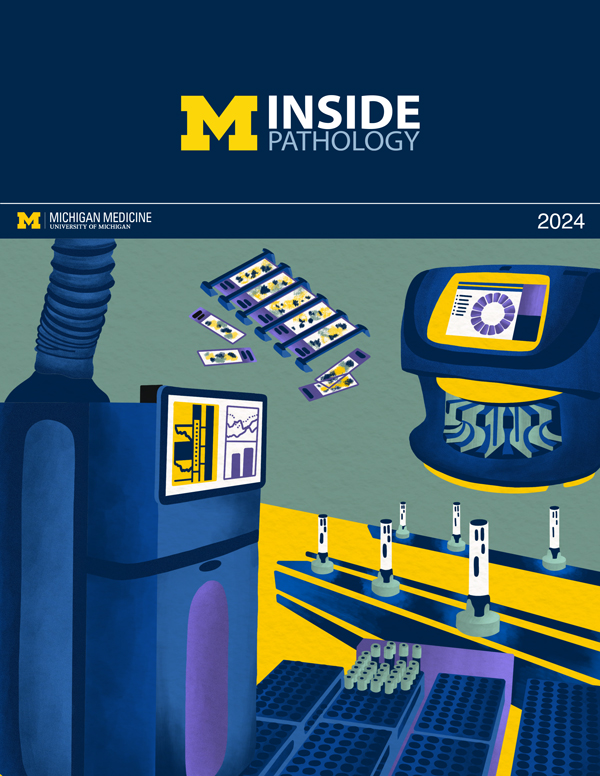
Illustration representing the various machines and processing used within our labs. |
newsletter
INSIDE PATHOLOGYAbout Our NewsletterInside Pathology is an newsletter published by the Chairman's Office to bring news and updates from inside the department's research and to become familiar with those leading it. It is our hope that those who read it will enjoy hearing about those new and familiar, and perhaps help in furthering our research. CONTENTS
|
 ON THE COVER
Rendering of the D. Dan and Betty Khn Health Care Pavilion. Credit: HOK |
newsletter
INSIDE PATHOLOGYAbout Our NewsletterInside Pathology is an newsletter published by the Chairman's Office to bring news and updates from inside the department's research and to become familiar with those leading it. It is our hope that those who read it will enjoy hearing about those new and familiar, and perhaps help in furthering our research. CONTENTS
|
MLabs, established in 1985, functions as a portal to provide pathologists, hospitals. and other reference laboratories access to the faculty, staff and laboratories of the University of Michigan Health System’s Department of Pathology. MLabs is a recognized leader for advanced molecular diagnostic testing, helpful consultants and exceptional customer service.